To allow airlines and airports to advance their planning, and for airlines to make available any excess airport capacity for others to use, ACL will now grant alleviation from non-use of slots to airlines at the 11 airports it coordinates across the European Union and the United Kingdom from 25th October 2020 to 27th March 2021. As required by the Commission in the statement by Commissioner Adina Valean, ACL will apply the industry agreed conditions (see more here) to the Winter waiver.
Our guidance gives full details which can be found here
ACL announces that Edmond Rose has decided to leave to pursue other opportunities. Edmond will remain in the CEO role while ACL’s Board appoints a replacement and will continue to lead the company for the coming months.
ACL’s chair, Lesley Cowley, commented: “I’m sorry that Edmond has taken the decision to move on from ACL. Since taking over as chair of the company earlier this year, I have enjoyed working with Edmond and supporting him and his team through the difficult and disruptive period caused by the pandemic. Throughout this time, I am pleased that ACL has maintained its delivery of excellent coordination and high levels of customer service under Edmond’s able leadership. He continues to have my full support while I and the Board begin the process to find and appoint his successor.”
How ACL are utilising Power BI to revolutionise slot data for our airport customers.
By Shahbaz Bhatti – Airport Slot Coordinator
Data Analytics has come a long way over the last decade and the aviation industry has been quick to benefit from the wealth of information available. Whilst it is good to have access to huge sets of data, however, being able to uncover insights or visualise this to a non-technical audience is often more challenging. To achieve this Airport Coordination Limited (ACL) have invested in Microsoft Power BI (PBI) to present our valuable data. PBI is a Microsoft business intelligence tool which allows users to connect multiple sources of data into powerful and interactive visuals that can be shared and collaborated on to inform important decision making.
Uses in the Aviation Industry
PBI is widely used within the aviation industry. Some of our biggest customers, including Heathrow Airport Ltd and Manchester Airport Group, have heavily invested in PBI to provide them ‘on the go’ data to drive their business needs. Click here to view an article and video where the CIO of Heathrow Airport Ltd describes how PBI has helped their day-to-day operations. Over the last two years, more of our airport and airline customers have started to invest in PBI; allowing us to collaborate better, provide more insightful analytics and enhance our service by providing reports in ways never seen before.
How ACL Utilise PBI:
ACL’s database is a comprehensive portfolio of airport slots. This asset is the fundamental driver of databases, operations, and resources for all our airport customers. As well as populating Flight Information Display Systems (FIDs), the raw data can be analysed and manipulated in ways to provide useful insights for various themes. ACL has used this data to create reports related to coordination activities, growth forecasts and slot usage investigations and monitoring.
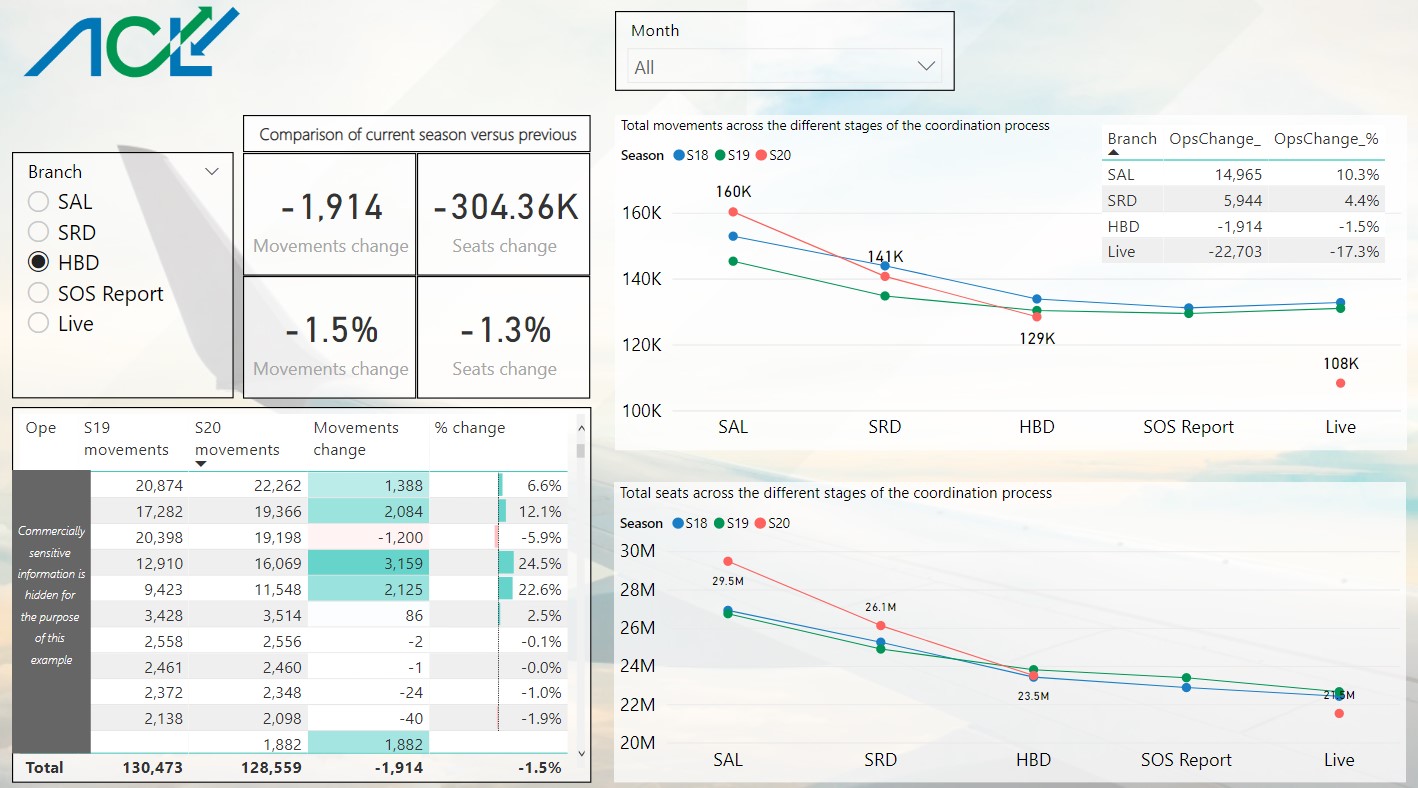
Figure 1 – Dashboard showing Seats and ATM’s comparison at different points of the coordination cycle.
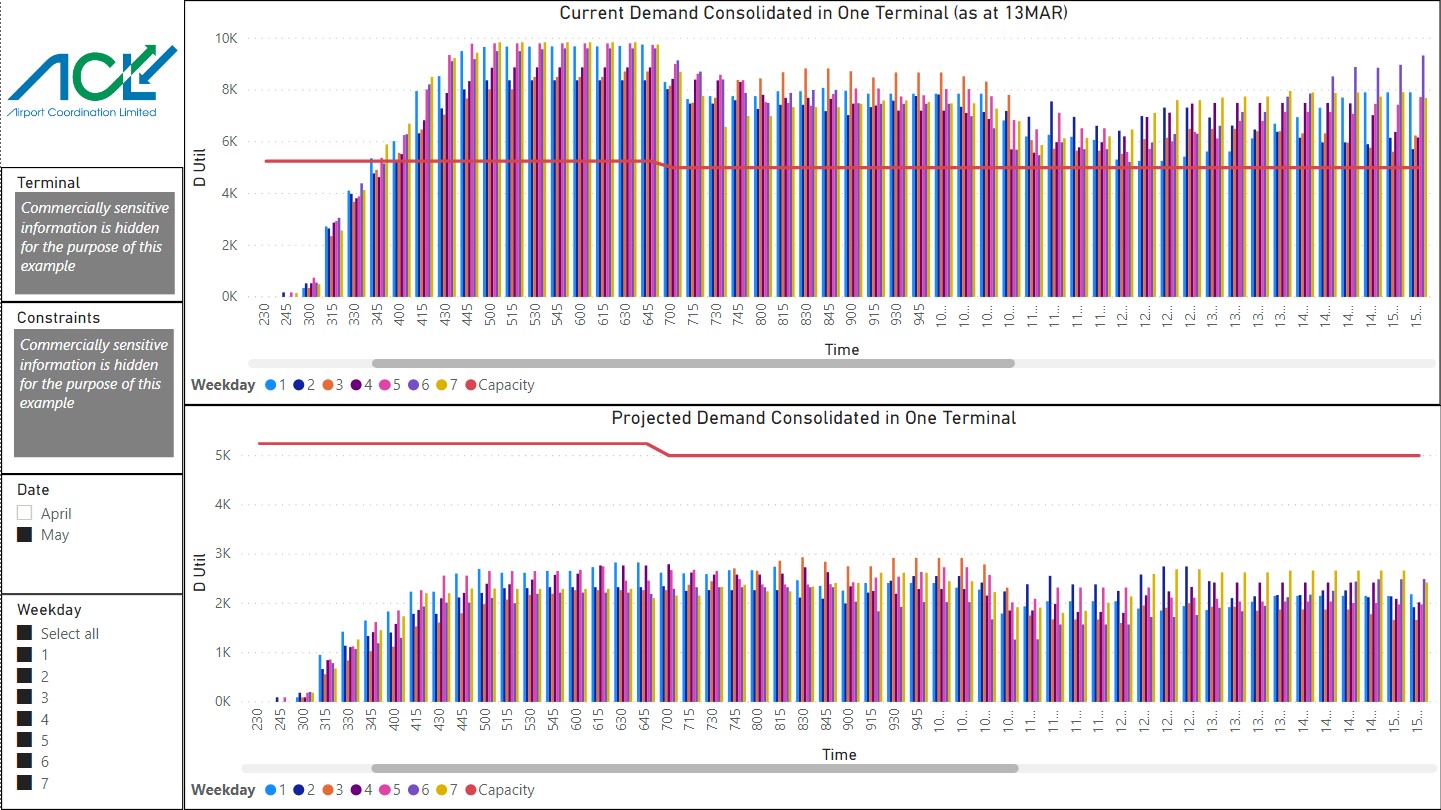
PBI has been an essential tool during the recent pandemic. To preserve their business, one of our biggest customers faced the decision to close more than 60% of their infrastructure. ACL adapted to the new environment and provided quick, precise and simple demand forecast histograms, to assist decision making on falling demand. The interactive visuals allowed users to filter different operators and terminals to understand and predict the result of various scenarios. At a time where our customers required immediate assistance, PBI has delivered on efficiency.
Figure 2 – Terminal Demand Histograms comparing current and projected passenger movements given Covid-19 assumptions.
This has been equally helpful in forecasting uplifts in demand. ACL worked with the same customer to produce histograms providing scenarios for when demand returns and the impact of social distancing measures. These insights allow airport customers to make informed decisions for re-opening in the most economical way.
“ACL produced a very useful power BI report to help us better understand and analyse our flight schedules. The ability to filter by different elements of our schedule – such as terminal, airline, date, arrival or departure – gave us access to the next level of detail beyond a standard coordination report and help understand what was behind our demand. This saved lots of discussion … and made much better use of everyone’s time! It’s a tool we’d find very useful going forward.” – ACL Airport Customer
Reporting can be utilised across the aviation community for groups such as the Industry Resilience Group (IRG) and NATS. The IRG is a collaboration of leading aviation bodies looking at enhancing day to day operating resilience, reducing delays and costs. PBI is effective for them as it allows us to store, visualise and refresh data ahead of the summer season and over several iterations. By building a PBI dashboard we can enhance the raw schedule data. This provides NATS with insights into the levels of congestion and where these are likely to take place. The daily updates we provide to NATS mean they can make reliable decisions on staffing, coinciding with the fall of traffic volumes and, more recently, with the signs of ramp-up in flights. This allows them to anticipate increases in traffic and the effect this has on their own resource planning.
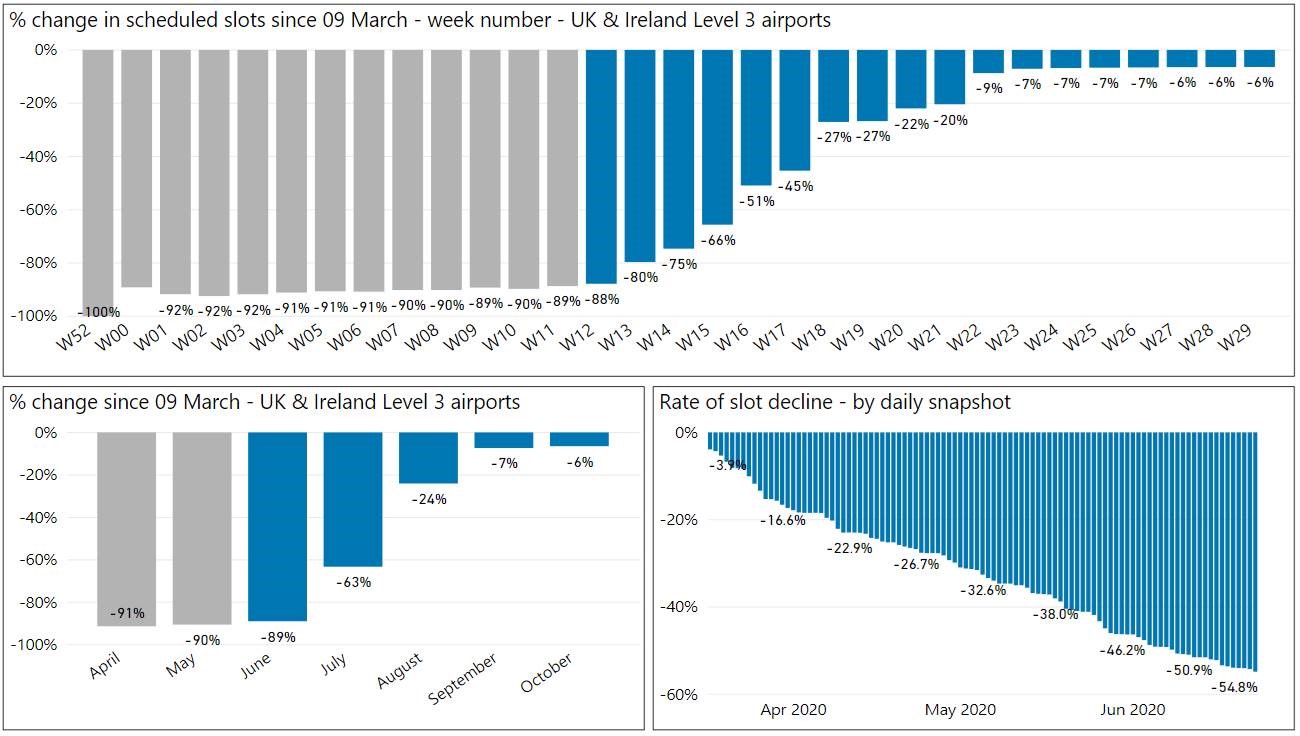
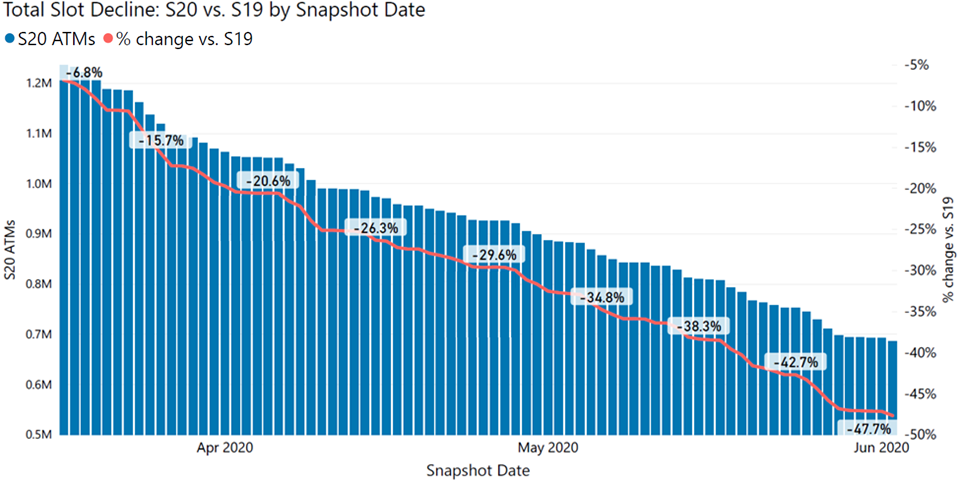
Figure 3 – Example Page from IRG Dashboard showing the decline in ATM’s as a result of the Covid-19 pandemic.
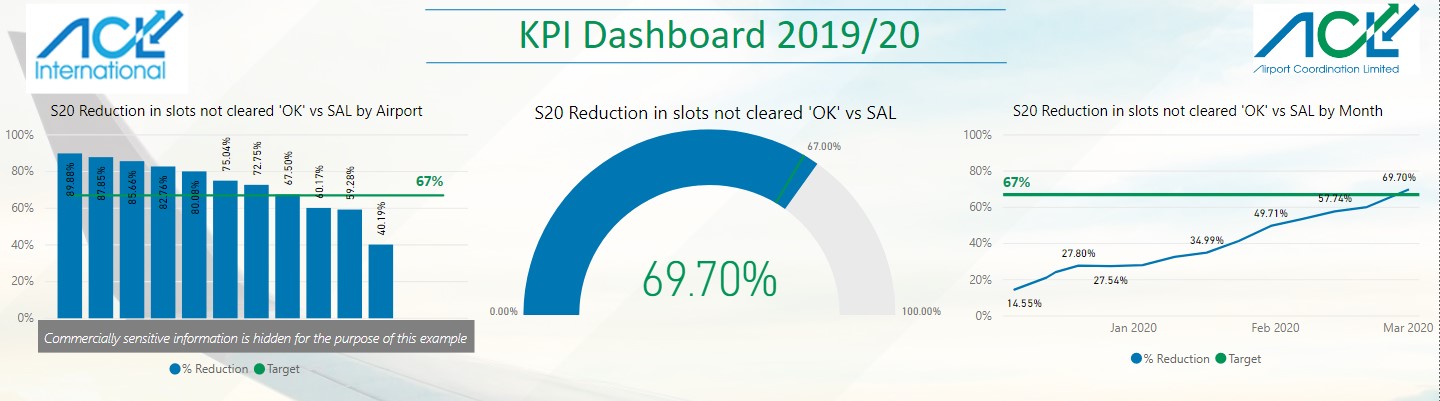
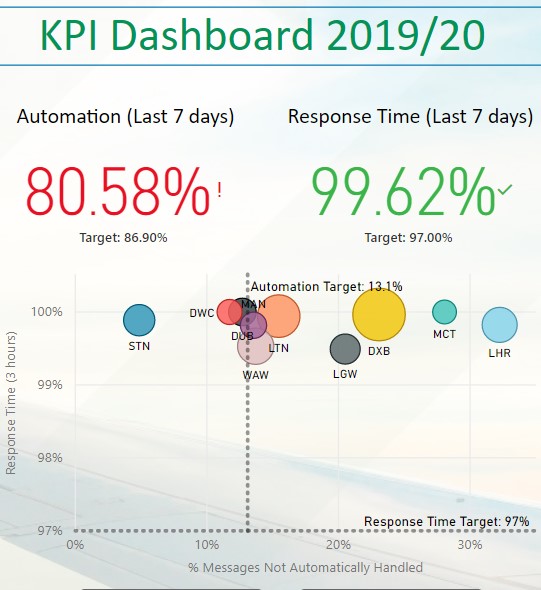
ACL also utilise PBI internally to improve our own KPI performance and help us reach our customer service goals. Combined data from our SQL and Excel databases are dynamically fed to our centralised intranet page, providing colleagues with accurate, up-to-date data which can be used to assess our own performance objectives and source solutions to benefit our customers.
ACL are committed to our values and to ‘Striving for Better’. We endeavour to explore and endorse new and innovative avenues, stay up to date with industry norms and enhance our services. PBI has allowed us to expand our data analytics knowledge which will only increase through further use and collaboration, allowing us to better support our customers and the aviation industry.
If you would like to explore how PBI and ACL analytics can support your airport please email us at pbihelp@acl-uk.org.
As reports of decreasing flights become more and more familiar, ACL’s Data Analyst, Chris Butler, looks at how cancellation activity can help us understand how allocated slots have declined, as well as what to expect as the summer season progresses.
Following the granting of widespread alleviation from the use-it-or-lose-it rule for Summer 2020 there have been extensive cancellations of airport slots as a result of widespread travel restrictions, meaning that slot volumes have been substantially reduced. Airport Coordination Limited (ACL) has seen weekly slot volumes fall as low as 9% of the volume seen last summer, with weekly allocated seats falling further to less than 4% of last year’s volume in April.
Significant reduction in slot volume was first seen at the end of Winter 2019, where total allocated slots declined by 5.2% from the beginning of March to the end of the winter season, a fall of over 70,000 slots. Slot decline accelerated through March, with weekly volumes falling to just 60% of the volume seen in the previous winter season.
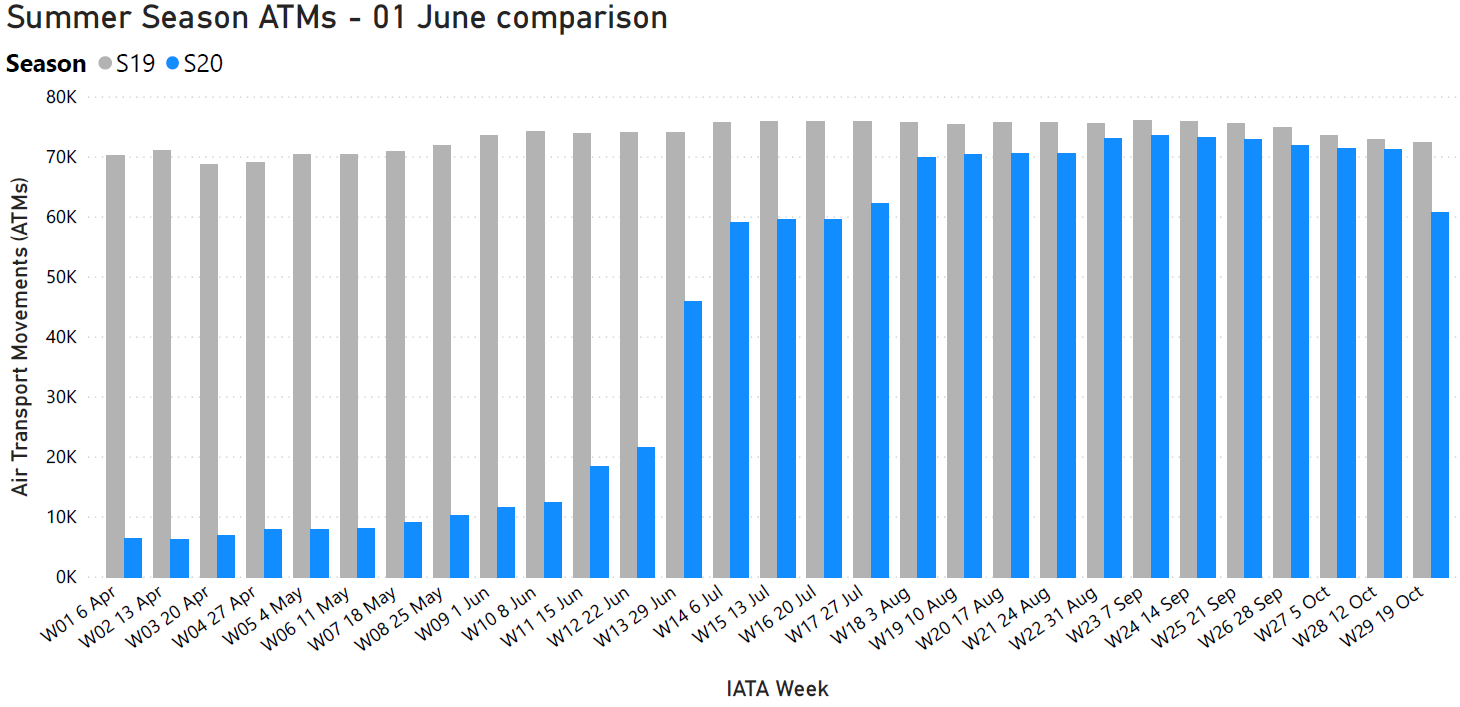
This decline only worsened as the Summer 2020 season began. At the beginning of June, total allocated summer season slots at UK airports were 48% lower than at the same point last year. This represents a sharp decline, with a deficit of over 730,000 slots year on year.
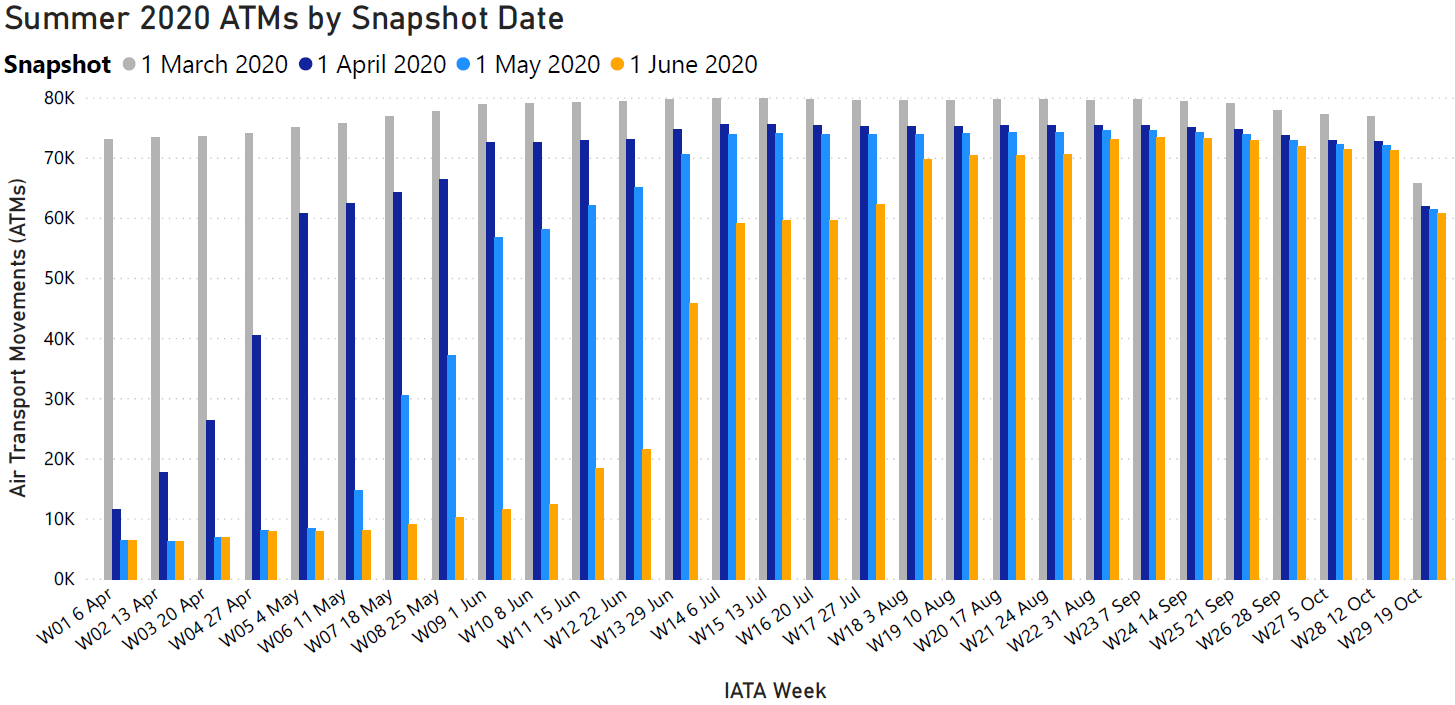
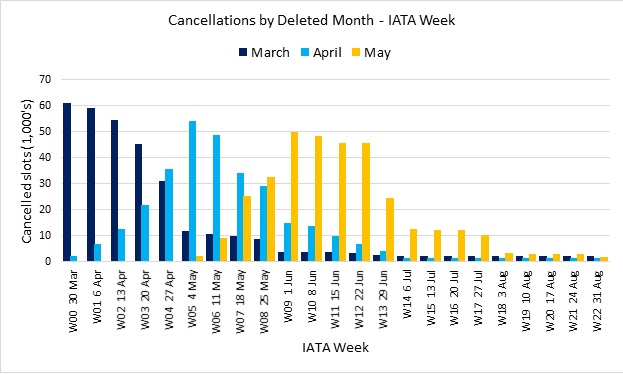
To date, decline in slot volume has substantially affected the early months of the Summer season, as airlines focus on their schedules held at the beginning of the season. By observing the total slot volume at monthly snapshots we can see how slot decline at the beginning of April was focussed on the first month of the season, with decline further into the summer months emerging at subsequent monthly snapshots.
Slots scheduled in June fell by 73% from the beginning of May to the beginning of June (a decline of over 185,000 slots), indicating the rate at which slots are being cancelled. These monthly snapshots show significant slot decline continuing as the season progresses, resulting from airlines cancelling slots on a piecewise basis due to resource restrictions and continued uncertainty regarding the possibility of increased flying.
As of 1 June, using S19 weekly slot volumes as a comparison, substantial decline is seen as far as the end of June (W13), where allocated slots are currently around 30% of the volume seen last year with some airlines yet to cancel slots held in July.
This currently represents a slight increase versus May, where slot volume was around 10% of last year’s volume. Caution should be taken however when looking further into the season (where slot volumes remain as high as 95%) as analysis of cancellation patterns indicates that slot decline is expected to roll into the coming months, as airlines amend their schedules further into the summer.
This chart breaks down the total cancelled slots by the month that those cancellations were made. The data indicates the pattern seen in cancellation activity, suggesting that the remaining summer volume will also reduce as cancellations reach further into the summer months. The scale of this reduction, however, is difficult to predict whilst the ongoing challenges posed by travel restrictions and quarantine periods remain unclear.
Whilst positivity is emerging from airlines regarding the re-introduction of air travel this summer, any uplift in flying will be difficult to forecast due to the rolling nature of cancellation activity. Despite this, ACL’s industry relations and the analysis of our schedule data will allow us to identify the early indications of any increases in flying, which may enable other members of the aviation industry to prepare for the challenges that an uplift in flying will bring.
Our experienced coordination manager, Pete Robinson, recalls his working from home journey and how he has coordinated some of the worlds busiest airports from his daughters bedroom.
Shortly before the UK went into official lockdown, I spent a day in mid-March touring London’s airports. Aviation was just beginning to slow down, and I was conscious of the noticeable reduction in movements and the presence of stationary aircraft at Stansted, Luton, Heathrow and Gatwick.
On the second day of the lockdown I celebrated 15 years at Airport Coordination Limited (ACL). During those years I have experienced closures and disruption of all kinds from severe weather, natural disasters, terrorism, conflicts and the grounding of aircraft fleets. Even the week-long closure of European airspace due to an Icelandic volcano in 2010 pales into insignificance next to the impact of Covid-19 on the worldwide aviation industry.
The first week of working from home was strange. I usually spend two and a half hours a day on my M25 commute and contrary to most, I was strangely experiencing withdrawal symptoms. I had to accept, with the schools closed, and my partner also working from home, finding a quiet place to work was going to be difficult. Luckily, only a few months earlier, we had bought each of our girls’ desks for their bedrooms and so, kicking my 5-year-old out, I began coordinating slots from my daughter’s bedroom, with her surrounding toys for company.
Some of the “winged” toys keeping me company in lieu of real aircraft!
So how do you coordinate some of the worlds most complex airports when your whole team is working from home? Less than 12 months earlier, ACL had invested in Microsoft Teams and trained all our staff in its use. Whilst its need had been limited before, this investment truly paid off. Video calls, screen and document sharing are the new norm across ACL. Guests from outside our organisation can easily join video calls and it has allowed us to provide the same level of communication with our customers in other remote locations. Each week ACL’s CEO, Edmond Rose, hosts a Q&A session and updates us on company affairs, and colleagues take it in turns to host regular afterwork quizzes, helping to maintain social contact with the wider ACL team.
During lockdown, I begin each morning running reports for the four international airports I manage. This helps me understand the schedule movements from the last 24 hours. I monitor travel restrictions, UK Foreign and Commonwealth travel advice and the international press for any significant developments. I then correlate these against the schedule changes we have received from airlines. This information is then fed to the rest of my team via my daily Teams update. Communication with colleagues has certainly changed, but video calls have allowed us to continue enjoying face-to-face interaction. I have a daily call with my Head of Coordination and then a further call between myself and my own team. These calls are crucial for relaying updates and activity across ACL and are an opportunity to agree any actions for the coming days.
My usual morning tea break with colleagues has now been replaced with a short stroll around my garden and tending to my plants. Some great weather and the additional time at home has left my garden looking in fine shape. What started as a home-schooling project, growing some vegetable seeds with my daughters, has developed into a gardening obsession, and I have proudly been sharing updates with my colleagues on my horticulture successes.
The evolution of my horticultural obsession.
A further highlight has been the successful roll-out of virtual coordinator training. My initial nerves over conducting training online have not been met and Teams has allowed me to share my screen with multiple users demonstrating tasks, encouraging discussions, and continuing the high level of training we provide to our coordinators.
After two months of daily cancellation activity across ACL’s airport portfolio, we are beginning to see signs of easing across Europe and there are indications that planes may return to the skies. One thing is for sure, the Summer 20 season will look very different from how it was first coordinated. The industry continues to consider how social distancing can be enacted and without concreate plans or guidance, it remains difficult to predict how demand and capacity will look in the coming twelve months.
So, as many of us adapt to the new normal, I have found myself a more suitable home and am coordinating from our spare bedroom, which I have temporarily converted to a home office. Working from home is staying a little while longer, but ACL will continue to provide our expert coordination services from whatever locations our staff find themselves, and we will continue to be both proactive and reactive to the challenges ahead.
Coordinating slots from my new temporary home office
ACL’s newest recruit, Wade Chan, discusses what it’s like starting a new job during a nation-wide lock-down.
Wade performing coordination from the comfort of her living room
On March 18th I received joining instructions from Marion, reconfirming my new role as a Coordinator at Airport Coordination Limited (ACL). To the amusement of my then colleagues, my start date was April 1st, April Fool’s Day; making them joke I had accepted a prank job. Whilst, I knew this was not true, with COVID-19 beginning to impact many jobs in aviation, I did start to worry.
The UK went into lockdown the following week and I began to consider if a new job was a wise decision. A few days later an email from ACL pinged on my phone ‘Change of joining Instructions’: my heart sunk. Expecting the job to be put on hold, I was relieved to read that my arrival time had merely been adjusted to a new time.
By the time I received my next email a week later my heart was pounding, and I delayed opening it for several hours. Again, my fears were misplaced, and it was simply another information update. I began to feel more confident. ACL were an organised company and I was looking forward to a new start in a new job.
April 1st came and mercifully it was not an April Fool’s joke! With great excitement, I entered ACL’s office and was immediately struck by its emptiness. A man quickly appeared with a welcoming smile and introduced himself as Richard Cann, Head of Coordination. Richard gave me a quick run down of the company, his job role, the plan for my induction and how I would immediately be working from home. Communication between the company was taking place across Microsoft Teams. Richard bought up the programme and demonstrated a call to Ingrid Hainy, my new line manager. Soon after I was given a work laptop and shown how I could access our system remotely. Within an hour I was back home; I had met only one colleague and was continuing my first day from my living room.
I successfully managed to log into the company VPN and made my first Teams call to my new manager. It was strange communicating in this method. Ingrid was extremely organised, welcoming and had crafted a whole training schedule via Teams. I met my first teammate online, Kavi Ghanasegaram, a coordinator like me. I would be shadowing Kavi to get an idea of what coordination involves. It was interesting to see how the slot system worked. Ingrid then began teaching me SSIM training and on my third day a meeting was arranged for me to meet ACL’s CEO, Edmond. Throughout my working life, I have never met the CEO of a company I worked for. To meet a CEO, almost in person, was another first for me; Edmond was very friendly and supportive.
My next week could be summarised as meetings galore! I met various members of ACL’s management and learnt about their roles. My first team meeting felt strange and I had little clue what was being discussed but working alongside Kavi made understanding and learning easier. Any issues were just a Teams call away; this made settling in easy despite being at home. Shahbaz Bhatti, another coordinator, was to be my daily trainer and mentor. Training sessions with him are very precise and detailed. Distance training feels odd initially but is easily adaptable.
A month on in my coordination role at ACL I feel comfortable handling messages. I was even entrusted with the responsibility of running Heathrow’s operation for a day! Though nervous initially, it allowed me to handle tasks myself and I gained direct expose to dynamic operational changes. I was grateful to Ingrid for giving me both the opportunity and for a chance to grow my confidence, something which is increasing day by day. Working from home is a unique experience. Everyone I have met at ACL (virtually) has been very friendly, helpful, and supportive. I look forward to meeting them all in person once lockdown ends.
Former Chairman, Jeff Halliwell, looks back on his time as Chair of ACL’s Board.
When the unfortunate departure of Monarch Airlines pulled Airport Coordination Limited (ACL) into the newspaper headlines in Autumn 2017, I was on a remote boat trip with my wife and largely uncontactable. To the puzzlement of some of my fellow passengers, I spent hours on deck searching for an internet connection so I could support management with the situation. The question arose whether Monarch’s administrators were entitled to the airlines previously held slots an issue without legal precedent. ACL’s eventual ruling was upheld in the High Court, but overturned on appeal; establishing a legal precedent which has been helpful since. While the legal judgement ultimately went against ACL, it was generally recognised that ACL had carried out its remit of acting in an independent and objective manner, in a complex case, something which I am proud of.
It was nevertheless a very enjoyable boat trip!
I joined ACL as its first independent Chair in 2013. Since ACL is required under EU slots regulations to act in an independent manner, it was deemed that the new Chair should be demonstrably independent of any aviation interest. As a former CEO of major food businesses, I met that requirement. Of course, along with lack of aviation background, came a total lack of knowledge about aviation in general, and slots in particular! However, people were very patient and put up with my idiotic questions. I’ve also been conscious that “a little knowledge is a dangerous thing” and have hopefully been able to distinguish between executive and non-executive matters, and not to interfere in the former; a task made easier thanks to the help of our very able ACL senior execs.
ACL performs its duties both very effectively, and cost-efficiently. This has enabled it to grow to become the world’s leading independent slot coordinator. Since 2012 turnover has increased by over 50%, and the number of airports coordinated outside the UK has more than doubled. And as well as helping improving capacity utilisation at some of the world’s largest and most constrained airports, ACL has facilitated the smooth operation of a number of major international events and has successfully supported some major airport reconfigurations.
By 2015, this growth exposed a clear need for focus on ACL’s international business and so ACL International Ltd was formed, a wholly owned subsidiary of ACL. This provided opportunity for a number of governance improvements and also encouraged the appointment of further directors who, like me, were free of prior aviation interests and could add to ACL’s already impressive breadth of board experience.
My job as Chair has been made immeasurably easier by the excellence of the executive teams I have worked with. Under its current CEO, Edmond Rose, ACL is well positioned to support the future of a sector which is currently in the middle of unprecedented challenges. When the world emerges from Covid-19, the industry will look very different, in ways which are today impossible to predict. However, airport slot coordination will continue to be a vital part of the efficient operation of aviation, and ACL has the ability, experience, and expertise to fully support that re-establishment.
When I started my term of office as Chair, I had no idea how enjoyable the next years would be. As ever, it’s the people you work with who make any role memorable, and I’ve been extremely lucky in working with, and learning from, some great colleagues. Now I’ve completed my lap, it’s time to hand the baton on to my very able successor, Lesley Cowley, a highly respected businesswoman who brings superb Chair and Non-Executive Director experience. I’ve no doubt that under her stewardship, ACL will reach even greater heights and make an even stronger contribution to international aviation.
It’s been a great personal and professional pleasure.
As our industry navigates one of the biggest challenges to aviation, we look at the more localised impact of Covid-19 and how Airport Coordination Limited (ACL)’s coordinator’s workloads have changed in the weeks following widespread alleviation.
by Chris Butler- Airport Capacity Analyst
The upheaval caused by Covid-19 and the associated granting of alleviation from the need to use slots to maintain historic rights in the summer season has resulted in mass flight cancellations, airport closures and other disruptions. This has meant that the usual volume of coordination messages received has varied significantly from what ACL would expect at the beginning of a ‘normal’ summer season and as such resulted in a significant increase in activity required by the coordinator community.
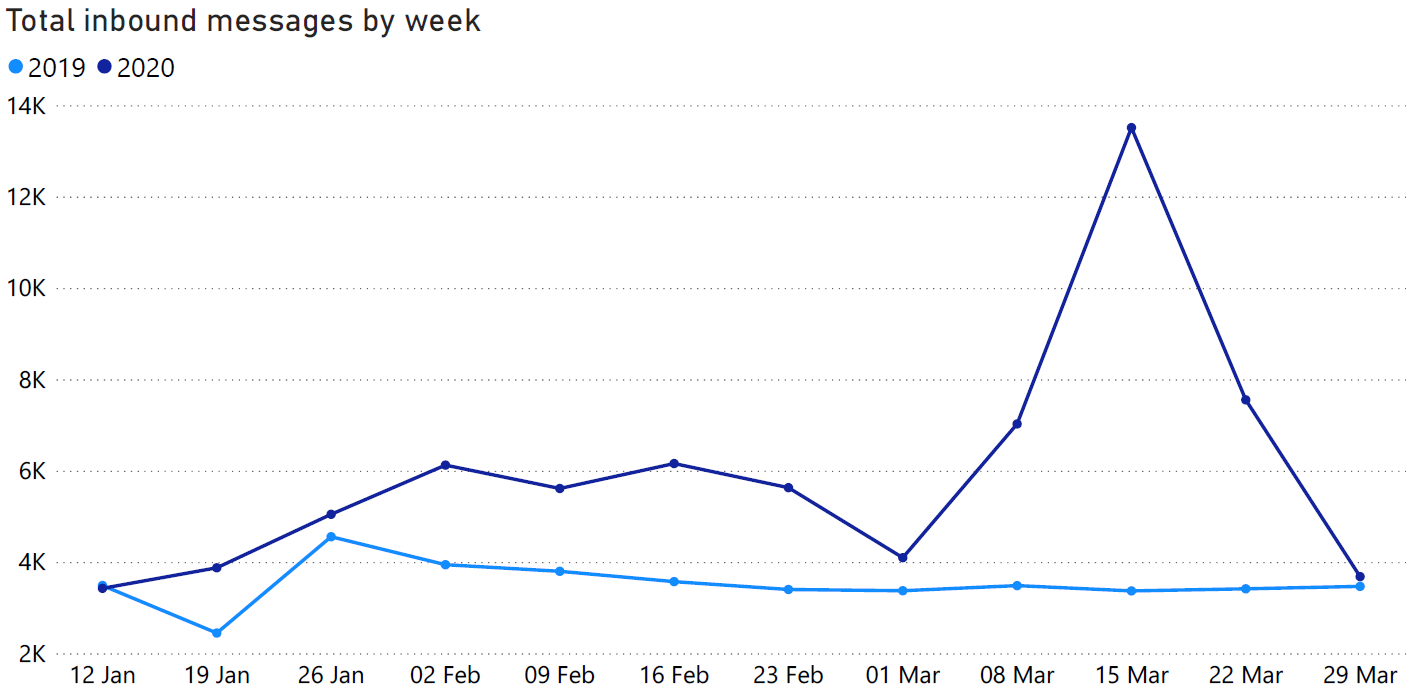
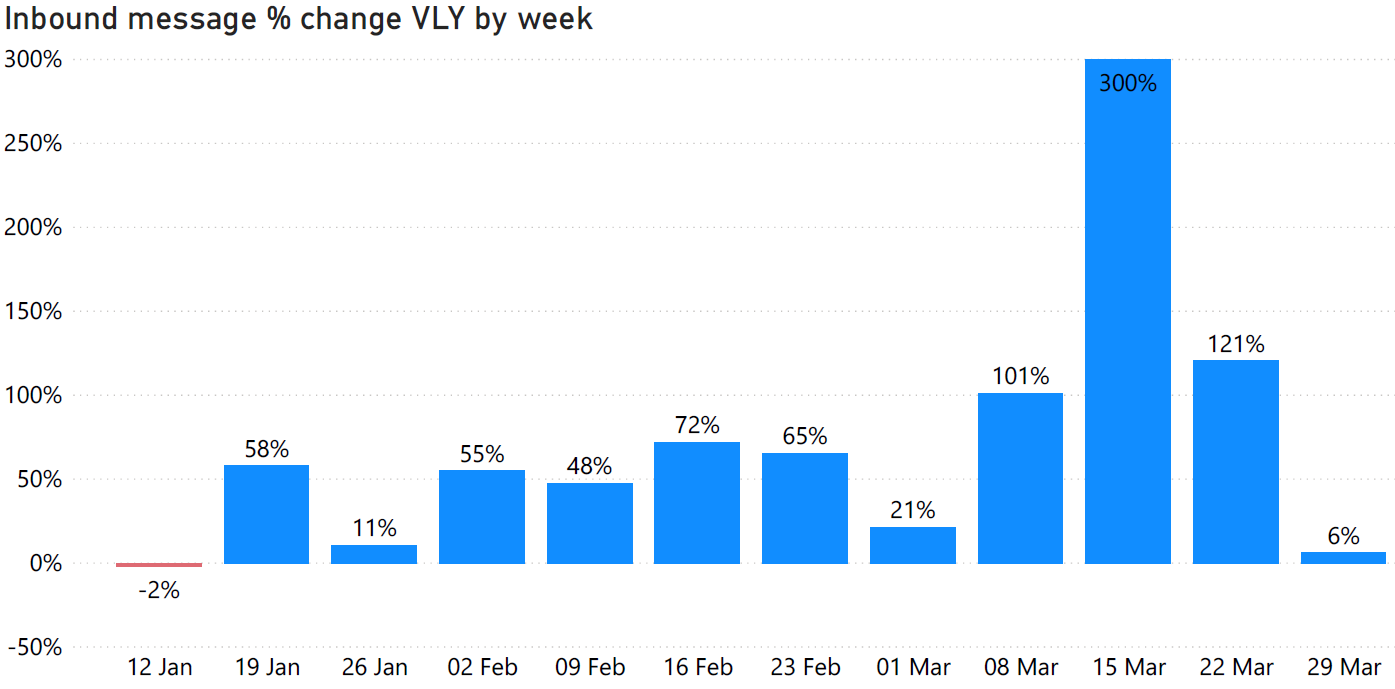
Towards the end of the Winter coordination season the volume of messages per week closely followed the levels seen in 2019. Following the increased impact of the outbreak of coronavirus however, the volume of messages received by ACL steadily increased. With alleviation of slots for the summer season granted, this culminated in an unprecedented peak in messages received, as the airlines responded by cutting back their schedules. At this peak, ACL managed over 13,500 individual messages in one week at over 40 different airports, from hundreds of different airlines.
This peak in coordination messages represented a 300% increase versus the same week in 2019, with substantial increases seen in the weeks leading up to the peak.
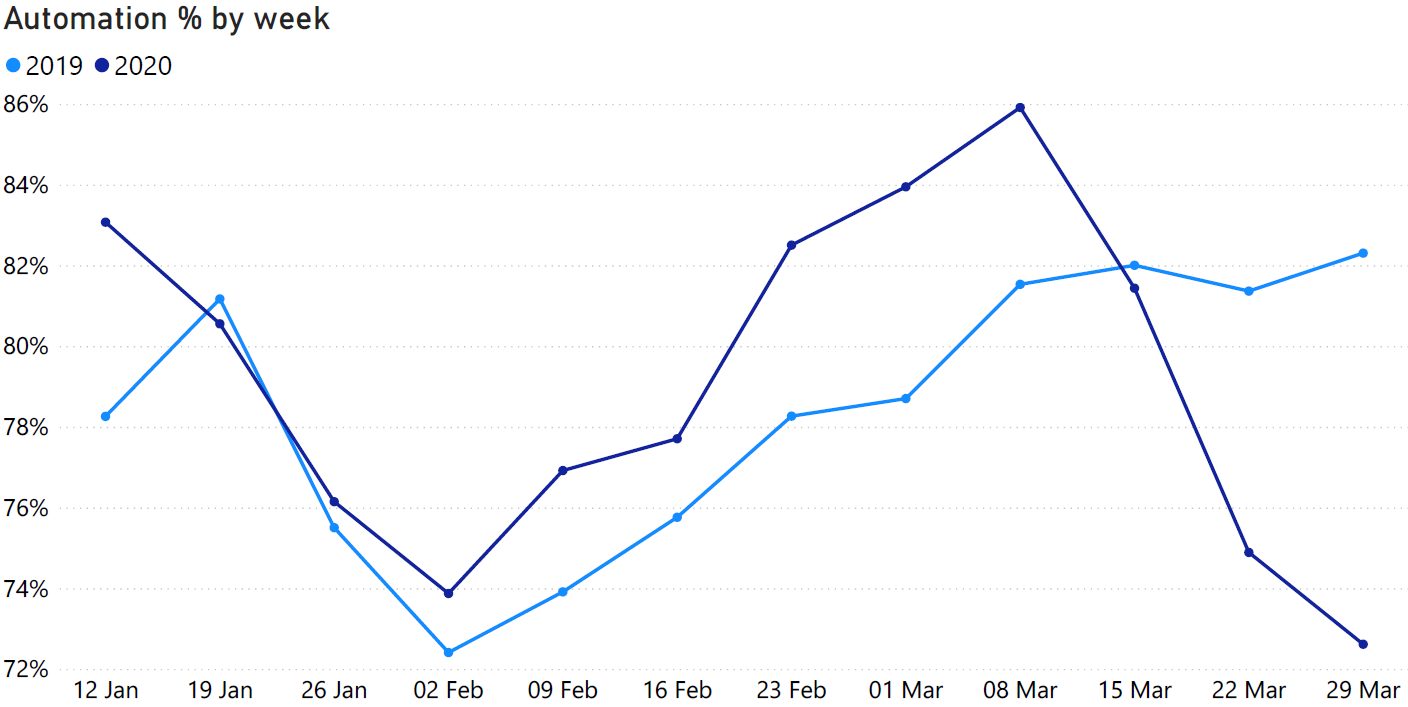
In addition to an increase in the volume of messages received during the peak period, the complexity of coordination also increased. This is due to unusual circumstances such as partial and full airport closures, as well as cancellation messages from airlines covering long periods of the season.
The result of this is a decrease in automation, meaning coordinators have a higher volume of messages that must be handled manually. The proportion of messages needing to be handled manually has nearly doubled.
Utilising our experience as the world’s oldest independent slot coordinator and from our frequent experience managing peak demand at airports during special or sudden events, ACL has responded to these challenges by providing flexible and efficient coordination in an extremely difficult time for the whole aviation industry.
Whilst it is likely that we have seen the initial peak of message volumes for the season, these challenges will continue. It is likely that we will see further cancellation activity in the weeks ahead as airlines adjust to changing circumstances throughout the summer season. ACL will continue to react to these challenges, benefitting from our experience and unique industry relationships, aiming to continue to provide coordination excellence in these difficult circumstances.
During the current Covid-19 outbreak, ACL is pleased to maintain its full service to customers, continuing to support the aviation industry through the current crisis. In March, we’ve handled more than double the usual number of schedule messages, as well as providing many bespoke reports for airports, support for airport planning and extra reports for data customers.
ACL’s staff will continue to be available during normal working hours for all our offices, whether in New Zealand, the UAE or the UK. We continue to follow official government advice in each country we operate by limiting contact and working from home.
Airport Coordination Limited (ACL) is delighted to announce that it has signed a contract with Oman Airports to provide schedule facilitation at Muscat International Airport and data collection at Duqm, Marmul, Qarn Alam, Salalah and Suhar airports. ACL won the contract through a competitive tender and begins its work on 25 February 2020.
Edmond Rose, ACL’s Chief Executive Officer, met with Sheikh Aimen bin Ahmed Al Hosni, Oman Airports’ CEO, in Muscat to sign the contract on the 24th February 2020. Edmond said, “ACL is proud to be taking over schedule facilitation and data collection at six airports operated by Oman Airports including Muscat and Salalah. We are pleased to bring our vast experience in managing airport capacity, our high-quality customer service and our sophisticated coordination systems to ensure that Oman’s airports can continue to flourish and serve aviation in the Sultanate.”
The contract with Oman Airports is the latest addition to ACL’s activity in the Gulf region. ACL took over schedule facilitation for Abu Dhabi International Airport in September 2019, and also coordinates Dubai International Airport and facilitates the schedule at Al Maktoum International Airport (DWC).
ACL now provides world-leading coordination, facilitation and data collection services at 46 airports across four continents from its offices in the UK, New Zealand and the United Arab Emirates.
Edmond Rose, ACL’s Chief Executive Officer, and Sheikh Aimen bin Ahmed Al Hosni, Oman Airports CEO, signing the contract on the 24th February 2020.