Winter worries and the question of Summer survival

Analyst Chris Butler looks at the continued decline in the winter schedule and the challenges and uncertainty facing Summer 2021

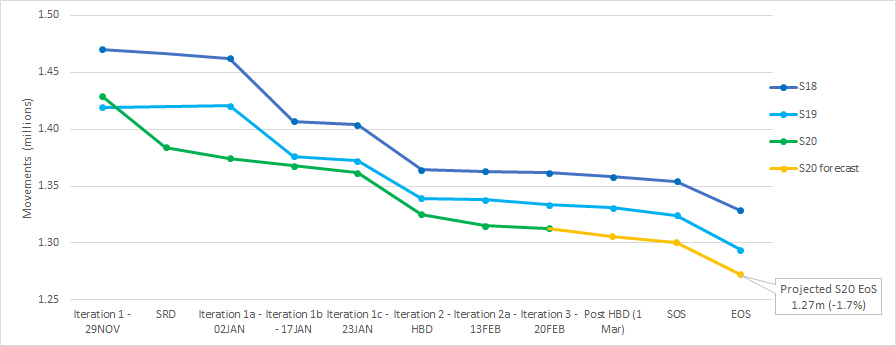
The latest wave of coronavirus restrictions has hit hard this Winter, dealing another blow to the aviation industry. UK schedules have become more volatile than ever, with airlines forced to change and cancel planned operations causing flight volumes for Winter 2020 (W20) to fall sharply.

Collapse in W20 traffic

National lockdowns and travel restrictions have affected UK aviation throughout the pandemic, with the first wave contributing to a 77% decline in traffic overall for Summer 2020 (S20) versus S19 (-1.2 million movements). W20 saw similar decline until the beginning of December brought initial signs of recovery, with 32% of W19 volume operating in the week beginning 16th December. Any growth was halted however by increases in UK infection rates and the subsequent tightening of lockdown and travel restrictions. W20 volume has declined to -74% versus W19 as a result, with further cancellations expected.

Scheduled volume for the festive period fell by 21% immediately after the announcement of additional UK restrictions on 21st Dec, with over 27,000 slots cancelled. The introduction of a third national lockdown prompted further cancellations; the first two weeks of 2021 saw 80,000 slots cancelled and a subsequent 27% decline in schedule volume for January – March, with airlines forced to abandon any plans of growth for the new year.
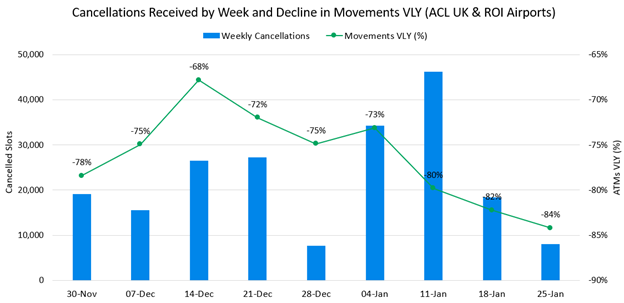
Figure 1 – Increase in cancellations per week following tightened restrictions resulting in reduced volume for January.

Schedule volume is unlikely to see substantial growth before the end of W20. ACL’s latest forecast indicates that the overall W20 volume could fall beyond -80% versus W19 based on the current rate of cancellations, with further reductions expected for February and March.

The collapse in W20 traffic versus last year has been seen across Level 3 airports including LGW (-87%) and LCY (-92%), as well as at regional airports such as CWL (-90%), SOU (-85%) and EXT (-85%). Despite periods of recovery in late summer and over the festive period, scheduled movements for both domestic and international routes saw a 77% decline in 2020 versus 2019, indicating the widespread nature of the decline in traffic.
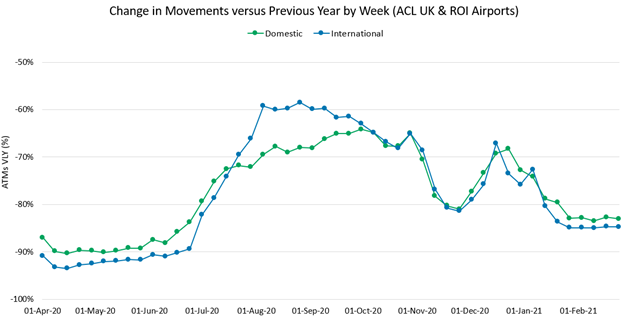
Figure 2 – Decline in both Domestic and International weekly movements versus previous year.

Outlook for Summer 2021 remains uncertain and volatile

Looking ahead to S21, the ongoing impact of travel restrictions across the world means airlines and airports face extreme uncertainty. The aviation industry in the UK and beyond faces several crucial questions when planning for S21.

Varying country-specific travel restrictions, vaccination programmes and testing procedures will mean that the pace at which different markets recover is likely to differ greatly. Reports indicate that over 7.1 million people have already received their first dose of the vaccination in the UK; the travel industry will hope that this could stimulate demand for certain markets this summer, however the extent of the impact of the UK’s vaccination programme on travel demand for S21 remains unknown.

ACL’s dynamic schedule data source covering 26 UK & ROI airports will capture the developments seen over the coming months. This provides a valuable source of information for those looking ahead and attempting to plan for an uncertain summer.

By Chris Butler

This article has been amended since original publication.

If you would like to know more about how your business could benefit from dynamic schedule data or ACL analysis, please contact denise.wakeford@acl-international.com
Revealed: How airline activity shows shoots of recovery

ACL’s airport analyst, Chris Butler, revisits the numbers, revealing what the latest flight volume numbers say and what this means for the remaining summer season.

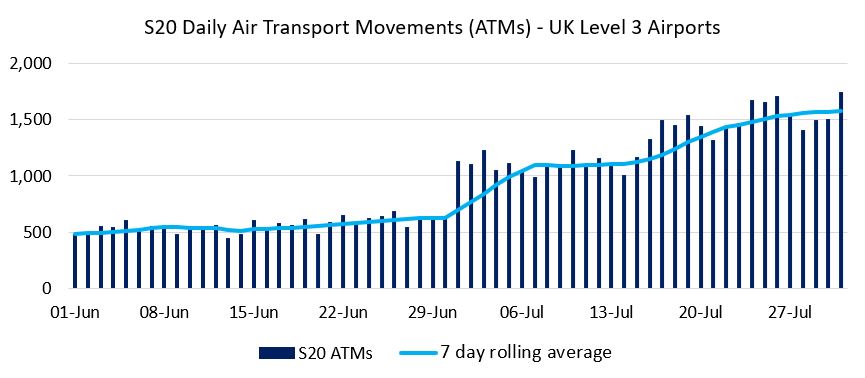
Over the past weeks we have seen initial signs of optimism for flying in Summer 2020. Changing government policies, as well as signs of increasing consumer demand, have enabled greater flexibility and allowed the aviation industry to focus on a ‘ramp-up’ in flying for the remainder of the S20 season. The first week of July saw over 1,000 slots held per day across UK Level 3 airports, representing over 20% of the volume seen in Summer 2019 and increasing to over 30% by the end of July.

This tentative return of flying follows a trend of widespread cancellations as a result of the Covid-19 outbreak with 600,000 slots cancelled at UK Level 3 airports since March, representing 65% of the total allocated slots for S20.

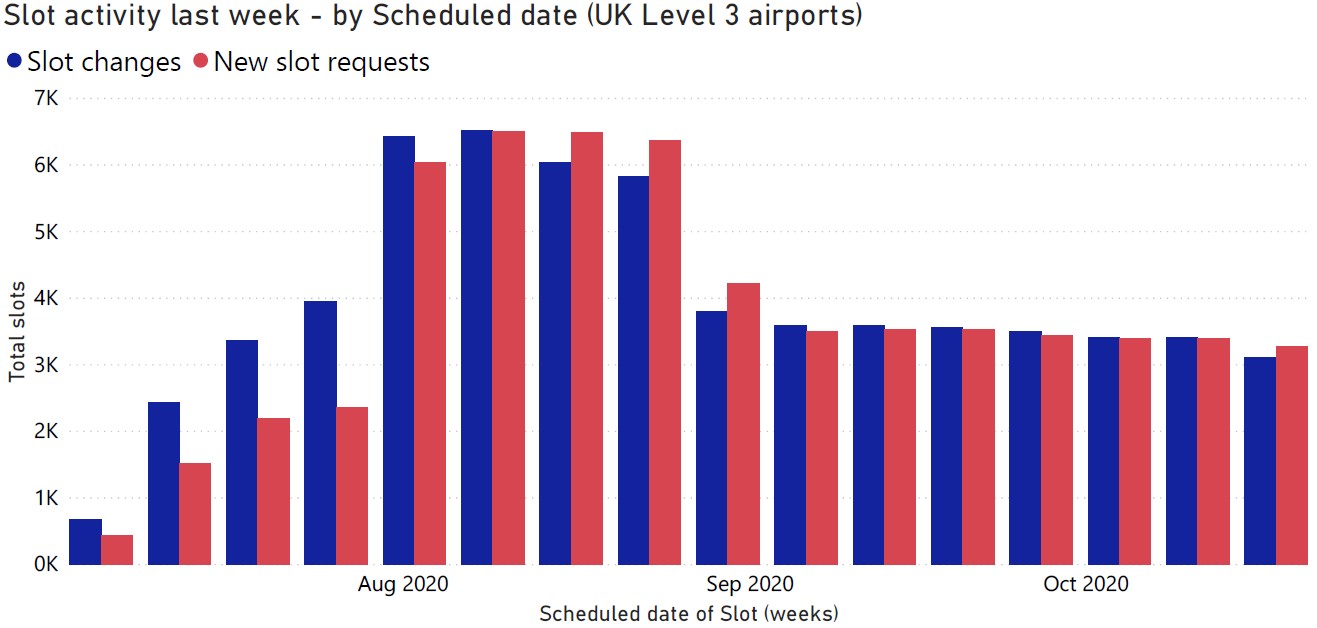
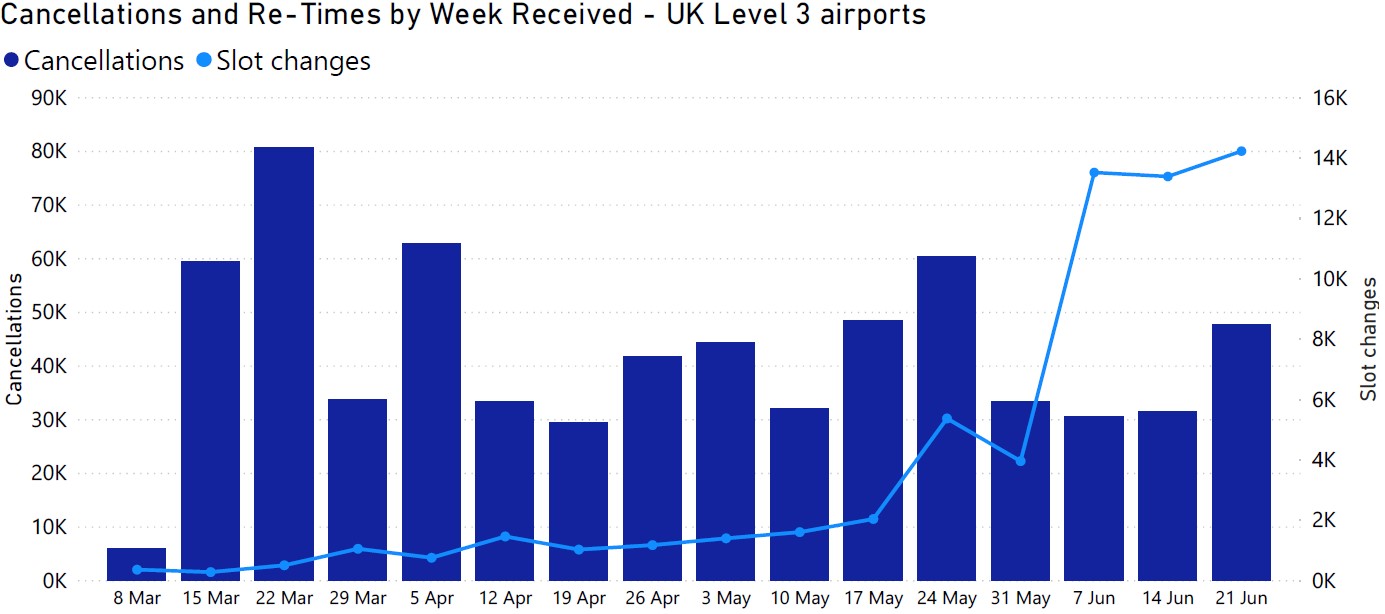
The volume of cancellations, however, is decreasing. June saw 12% fewer cancellations than seen in May, as airlines begin to align their schedules to the expected summer demand. We can also analyse the number of ‘slot changes’ made by airlines (route, time and equipment changes to existing slots held in the schedule) to understand how this preparation for a ramp-up in flying has increased. June saw an increase in slot changes of over 250% compared to May, suggesting that airlines have significantly increased their activity in preparation for restarting some limited flying in S20.

June has also seen a 187% increase versus May in the number of ad-hoc slots added to the S20 schedule at UK Level 3 airports, translating to over 22,000 new slots. Schedule data can be used to identify where airlines are seeking to ramp up operations; 42% of slot changes made last week were for slots held in August, which may indicate that airlines are planning for a substantial increase in flying volume next month relative to current levels.

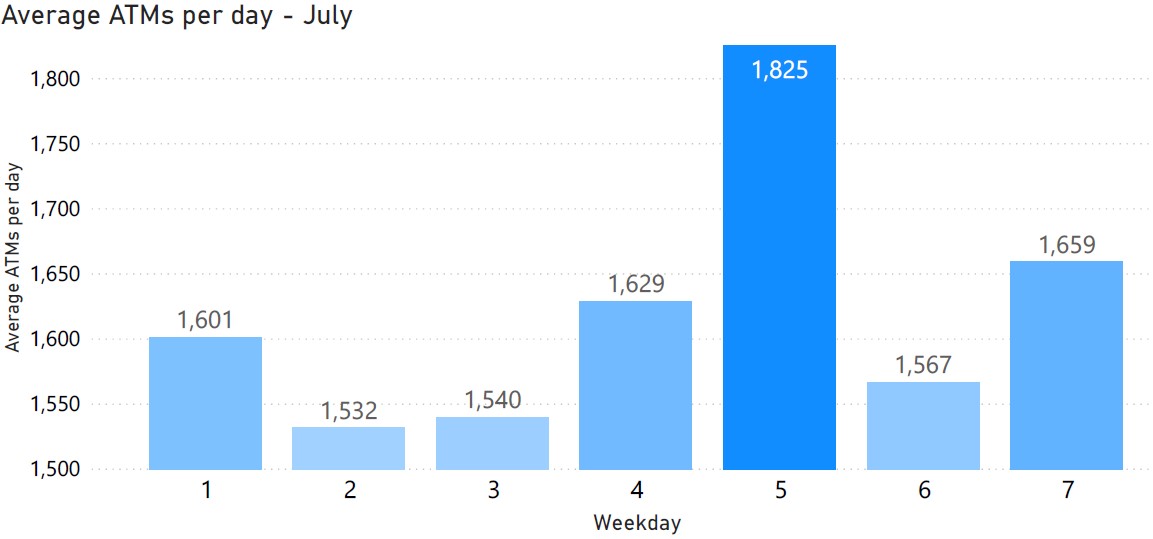
Analysis of ACL schedule data suggests that demand will not return uniformly; peaks in flying volumes may present further challenges to the industry as flights restart. Volumes in July are significantly higher on Day 5 (Friday), as airlines plan to meet demand for leisure flying.

Whilst the overall average number of flights per day in July equates to just 25% of last summer’s volume, the current schedule indicates that July will see an average of over 1,800 flights per day on Day 5, representing 34% of the volume seen in S19.

Summary

Our data indicates that the S20 schedule will remain extremely dynamic as airlines prepare to increase flying across the coming months. By analysing the volume of changes made to existing schedules we can forecast changes in flying at specific airports, times, and dates. ACL are committed to monitoring and reporting on these trends to support the aviation industry in successfully re-introducing flying for the remainder of the summer.

For more information on our schedule data or for any queries regarding ACL’s work, please get in touch -info@acl-uk


By Chris Butler

Unlocking the Power of Airport Slot Data

How ACL are utilising Power BI to revolutionise slot data for our airport customers.

By Shahbaz Bhatti – Airport Slot Coordinator 

Data Analytics has come a long way over the last decade and the aviation industry has been quick to benefit from the wealth of information available. Whilst it is good to have access to huge sets of data, however, being able to uncover insights or visualise this to a non-technical audience is often more challenging.  To achieve this Airport Coordination Limited (ACL) have invested in Microsoft Power BI (PBI) to present our valuable data. PBI is a Microsoft business intelligence tool which allows users to connect multiple sources of data into powerful and interactive visuals that can be shared and collaborated on to inform important decision making.

Uses in the Aviation Industry

PBI is widely used within the aviation industry. Some of our biggest customers, including Heathrow Airport Ltd and Manchester Airport Group, have heavily invested in PBI to provide them ‘on the go’ data to drive their business needs. Click here to view an article and video where the CIO of Heathrow Airport Ltd describes how PBI has helped their day-to-day operations. Over the last two years, more of our airport and airline customers have started to invest in PBI; allowing us to collaborate better, provide more insightful analytics and enhance our service by providing reports in ways never seen before.

How ACL Utilise PBI:

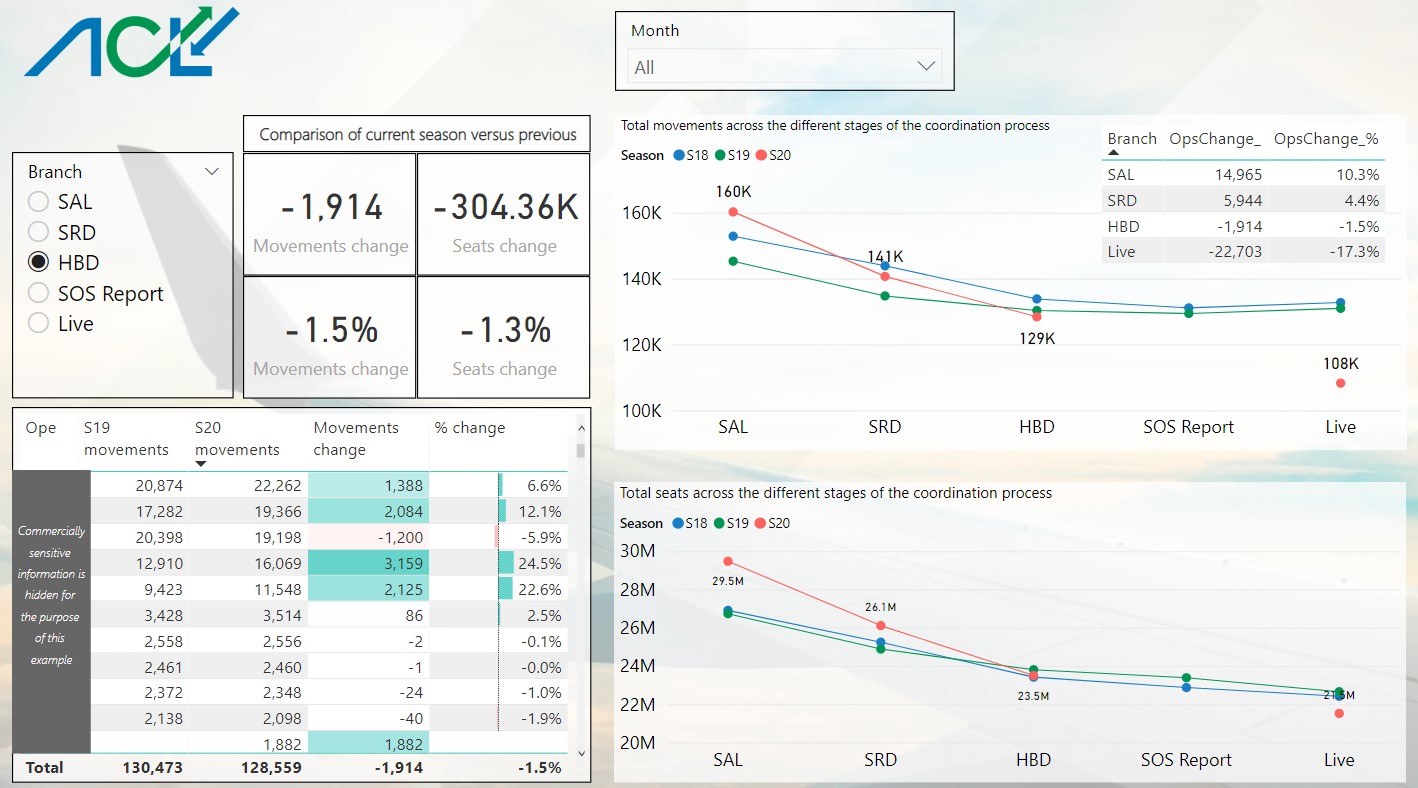
ACL’s database is a comprehensive portfolio of airport slots. This asset is the fundamental driver of databases, operations, and resources for all our airport customers. As well as populating Flight Information Display Systems (FIDs), the raw data can be analysed and manipulated in ways to provide useful insights for various themes. ACL has used this data to create reports related to coordination activities, growth forecasts and slot usage investigations and monitoring.


Figure 1 – Dashboard showing Seats and ATM’s comparison at different points of the coordination cycle.


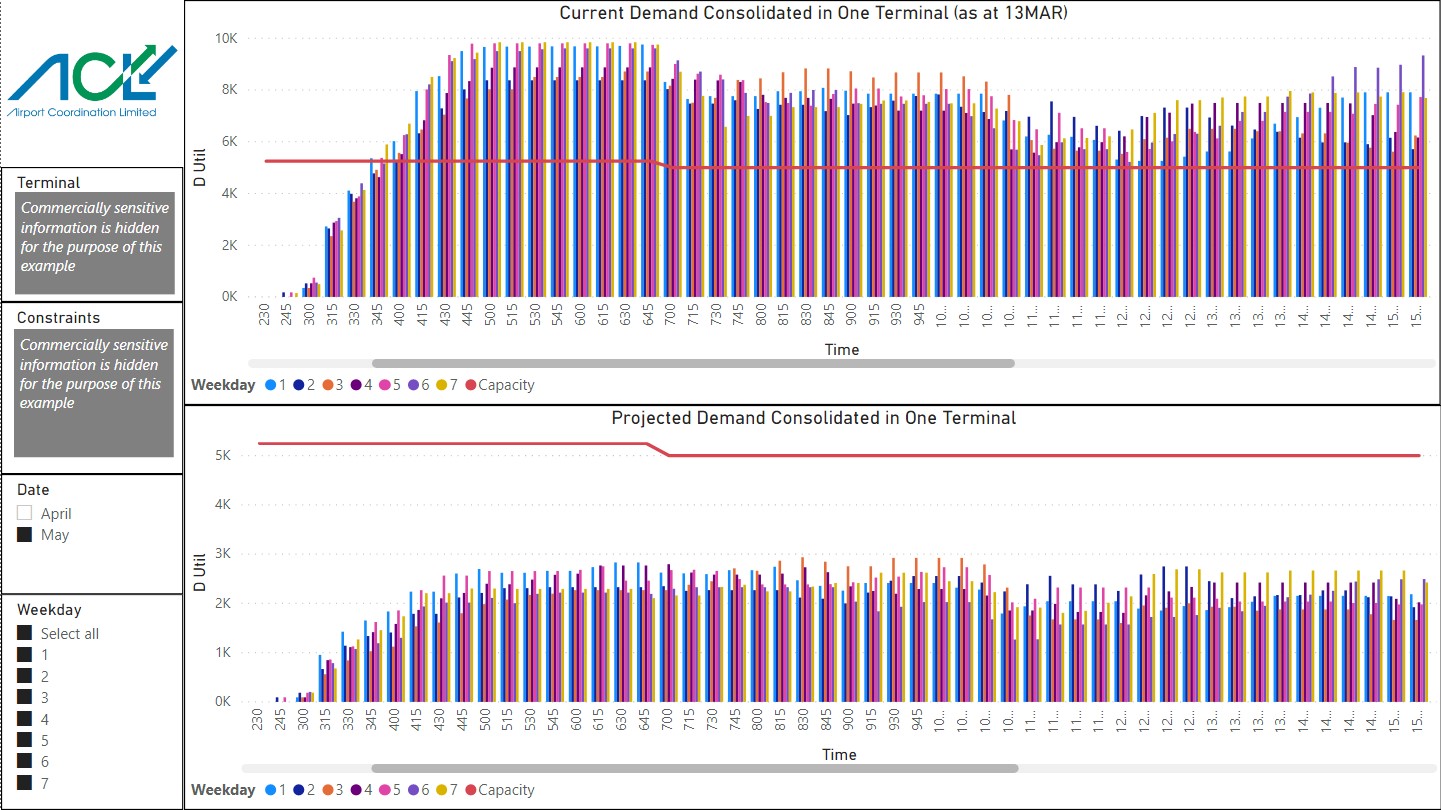
PBI has been an essential tool during the recent pandemic. To preserve their business, one of our biggest customers faced the decision to close more than 60% of their infrastructure. ACL adapted to the new environment and provided quick, precise and simple demand forecast histograms, to assist decision making on falling demand. The interactive visuals allowed users to filter different operators and terminals to understand and predict the result of various scenarios. At a time where our customers required immediate assistance, PBI has delivered on efficiency.


Figure 2 – Terminal Demand Histograms comparing current and projected passenger movements given Covid-19 assumptions.


This has been equally helpful in forecasting uplifts in demand. ACL worked with the same customer to produce histograms providing scenarios for when demand returns and the impact of social distancing measures. These insights allow airport customers to make informed decisions for re-opening in the most economical way.

“ACL produced a very useful power BI report to help us better understand and analyse our flight schedules. The ability to filter by different elements of our schedule – such as terminal, airline, date, arrival or departure – gave us access to the next level of detail beyond a standard coordination report and help understand what was behind our demand. This saved lots of discussion … and made much better use of everyone’s time!  It’s a tool we’d find very useful going forward.” – ACL Airport Customer

Reporting can be utilised across the aviation community for groups such as the Industry Resilience Group (IRG) and NATS. The IRG is a collaboration of leading aviation bodies looking at enhancing day to day operating resilience, reducing delays and costs. PBI is effective for them as it allows us to store, visualise and refresh data ahead of the summer season and over several iterations. By building a PBI dashboard we can enhance the raw schedule data. This provides NATS with insights into the levels of congestion and where these are likely to take place. The daily updates we provide to NATS mean they can make reliable decisions on staffing, coinciding with the fall of traffic volumes and, more recently, with the signs of ramp-up in flights. This allows them to anticipate increases in traffic and the effect this has on their own resource planning.


Figure 3 – Example Page from IRG Dashboard showing the decline in ATM’s as a result of the Covid-19 pandemic.


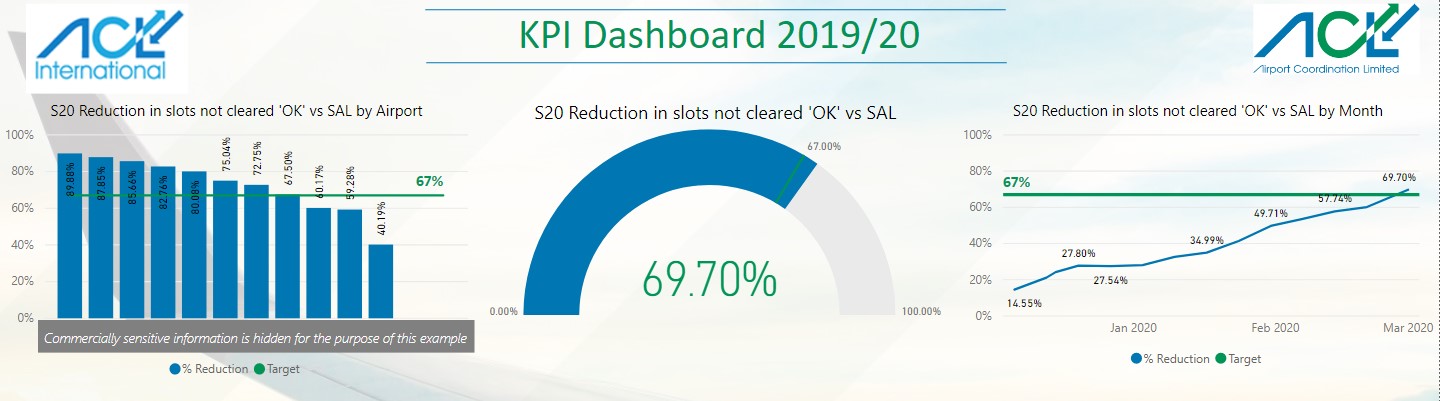
ACL also utilise PBI internally to improve our own KPI performance and help us reach our customer service goals. Combined data from our SQL and Excel databases are dynamically fed to our centralised intranet page, providing colleagues with accurate, up-to-date data which can be used to assess our own performance objectives and source solutions to benefit our customers.


Figure 4 – ACL’s Internal KPI Dashboard showing Waitlist Management target and position.


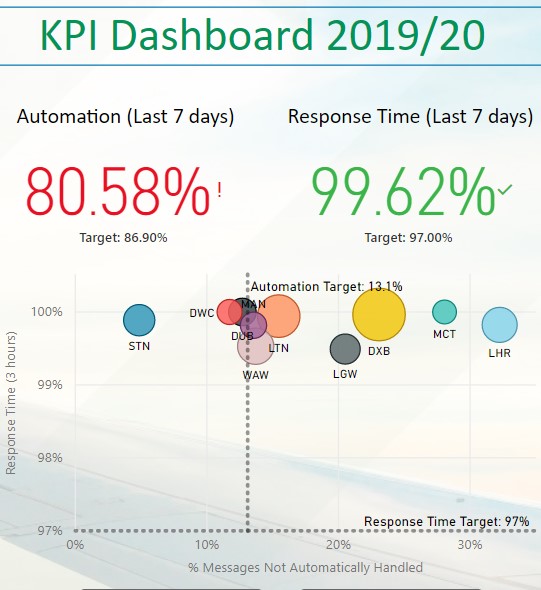
Figure 5 -ACL’s Internal KPI Dashboard displaying Message Handling statistics.


Next Steps:

ACL are committed to our values and to ‘Striving for Better’. We endeavour to explore and endorse new and innovative avenues, stay up to date with industry norms and enhance our services. PBI has allowed us to expand our data analytics knowledge which will only increase through further use and collaboration, allowing us to better support our customers and the aviation industry.

If you would like to explore how PBI and ACL analytics can support your airport please email us at pbihelp@acl-uk.org.


Understanding Airport Slot Cancellations in a Global Pandemic – What the Numbers Say

As reports of decreasing flights become more and more familiar, ACL’s Data Analyst, Chris Butler, looks at how cancellation activity can help us understand how allocated slots have declined, as well as what to expect as the summer season progresses.

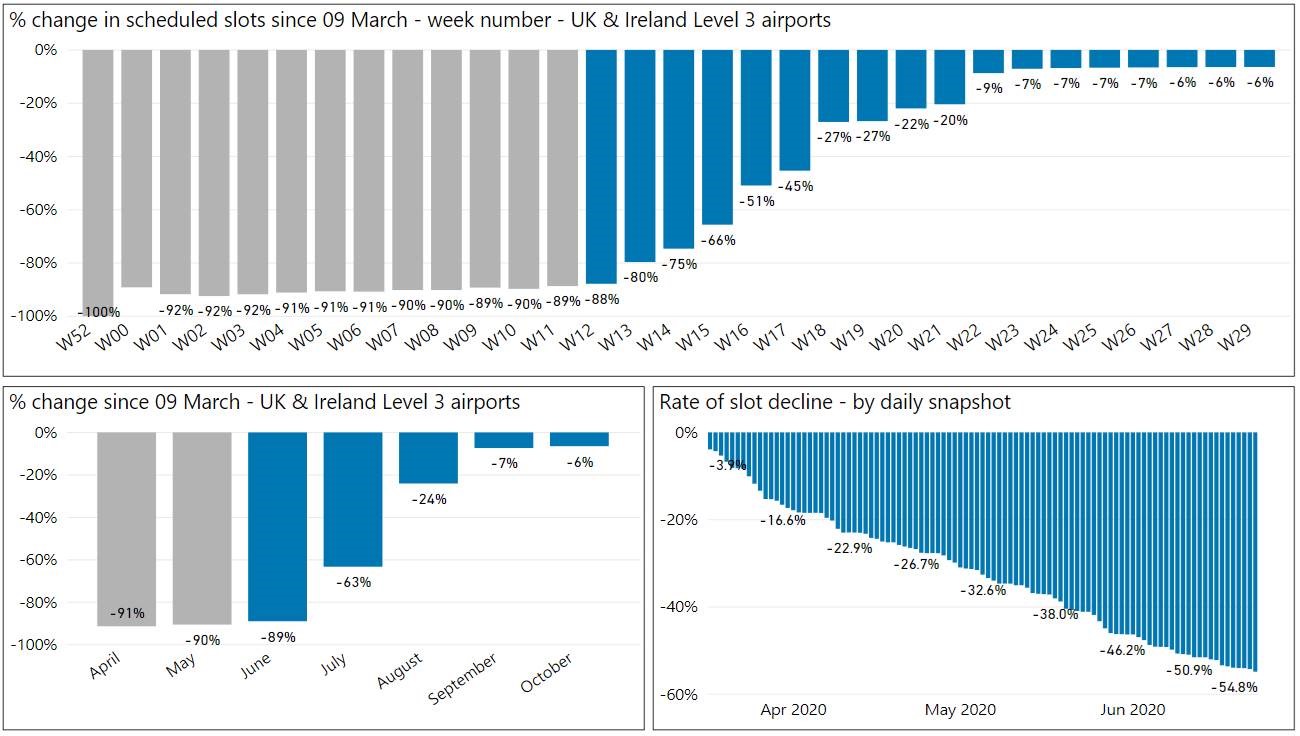
Following the granting of widespread alleviation from the use-it-or-lose-it rule for Summer 2020 there have been extensive cancellations of airport slots as a result of widespread travel restrictions, meaning that slot volumes have been substantially reduced. Airport Coordination Limited (ACL) has seen weekly slot volumes fall as low as 9% of the volume seen last summer, with weekly allocated seats falling further to less than 4% of last year’s volume in April.

Significant reduction in slot volume was first seen at the end of Winter 2019, where total allocated slots declined by 5.2% from the beginning of March to the end of the winter season, a fall of over 70,000 slots. Slot decline accelerated through March, with weekly volumes falling to just 60% of the volume seen in the previous winter season.

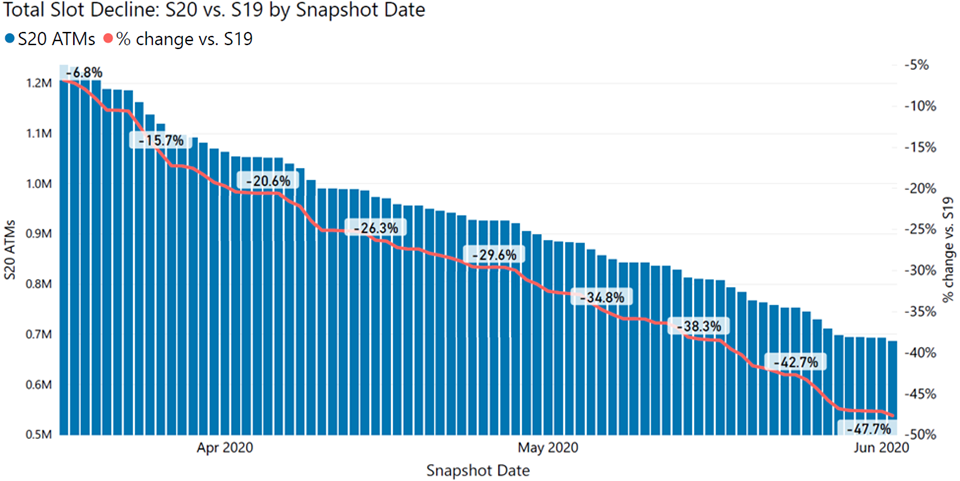
This decline only worsened as the Summer 2020 season began. At the beginning of June, total allocated summer season slots at UK airports were 48% lower than at the same point last year. This represents a sharp decline, with a deficit of over 730,000 slots year on year.

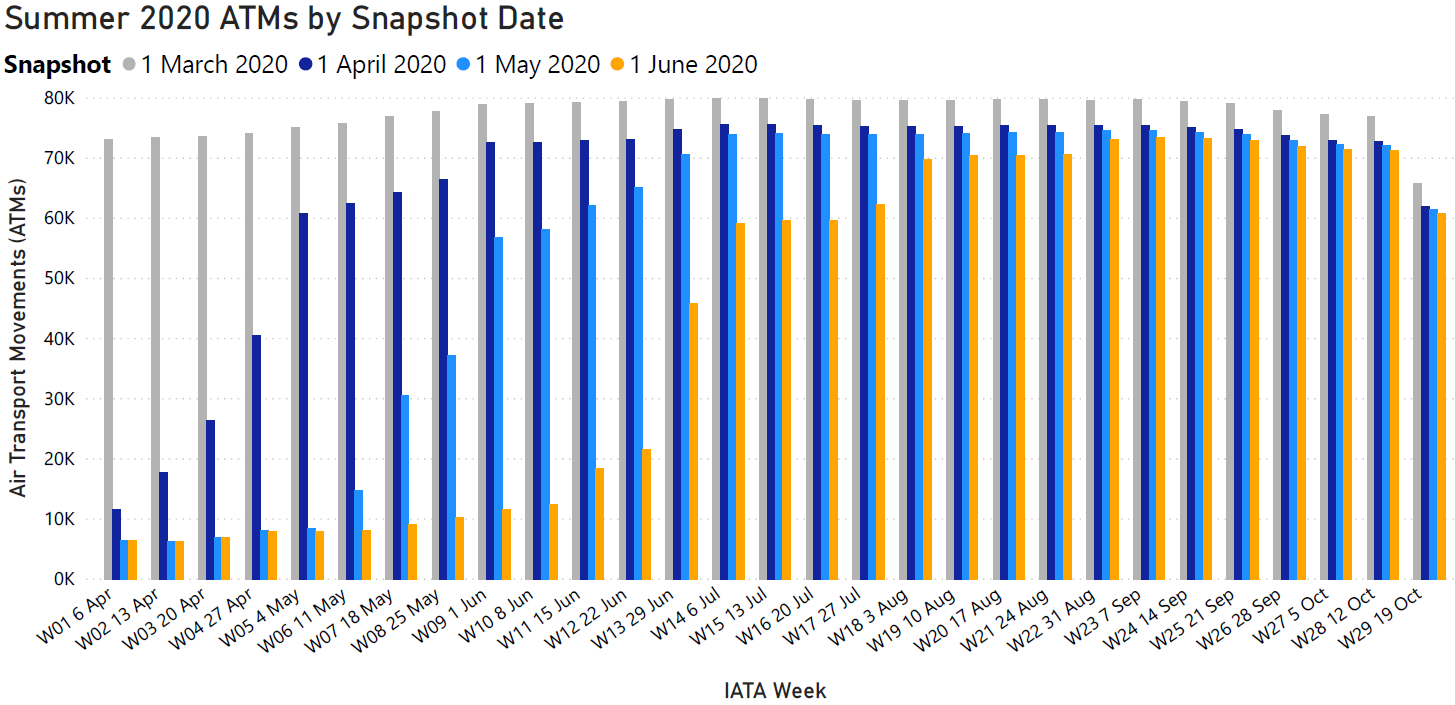
To date, decline in slot volume has substantially affected the early months of the Summer season, as airlines focus on their schedules held at the beginning of the season. By observing the total slot volume at monthly snapshots we can see how slot decline at the beginning of April was focussed on the first month of the season, with decline further into the summer months emerging at subsequent monthly snapshots.

Slots scheduled in June fell by 73% from the beginning of May to the beginning of June (a decline of over 185,000 slots), indicating the rate at which slots are being cancelled. These monthly snapshots show significant slot decline continuing as the season progresses, resulting from airlines cancelling slots on a piecewise basis due to resource restrictions and continued uncertainty regarding the possibility of increased flying.

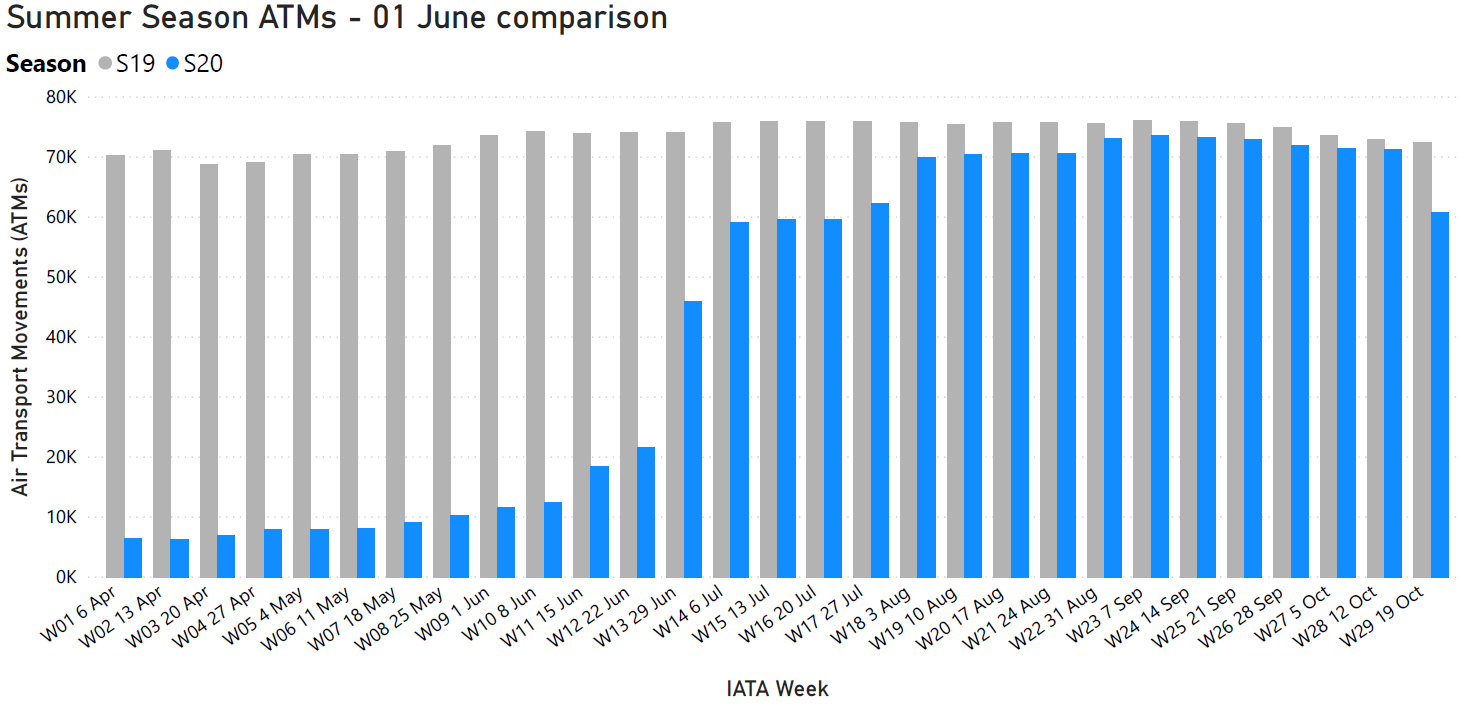
As of 1 June, using S19 weekly slot volumes as a comparison, substantial decline is seen as far as the end of June (W13), where allocated slots are currently around 30% of the volume seen last year with some airlines yet to cancel slots held in July.

This currently represents a slight increase versus May, where slot volume was around 10% of last year’s volume. Caution should be taken however when looking further into the season (where slot volumes remain as high as 95%) as analysis of cancellation patterns indicates that slot decline is expected to roll into the coming months, as airlines amend their schedules further into the summer.

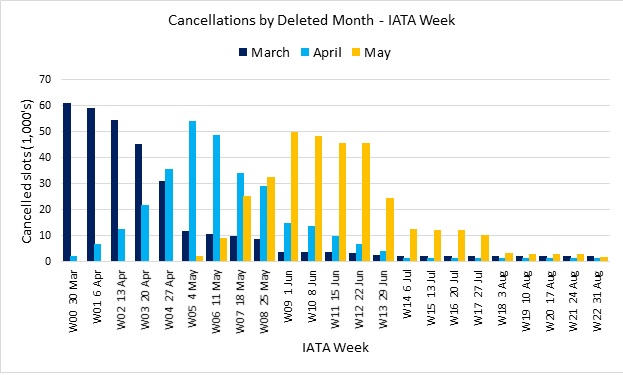
This chart breaks down the total cancelled slots by the month that those cancellations were made. The data indicates the pattern seen in cancellation activity, suggesting that the remaining summer volume will also reduce as cancellations reach further into the summer months. The scale of this reduction, however, is difficult to predict whilst the ongoing challenges posed by travel restrictions and quarantine periods remain unclear.

Whilst positivity is emerging from airlines regarding the re-introduction of air travel this summer, any uplift in flying will be difficult to forecast due to the rolling nature of cancellation activity. Despite this, ACL’s industry relations and the analysis of our schedule data will allow us to identify the early indications of any increases in flying, which may enable other members of the aviation industry to prepare for the challenges that an uplift in flying will bring.

By Chris Butler- Airport Capacity Analyst

What does coordination activity look like after widespread alleviation?

As our industry navigates one of the biggest challenges to aviation, we look at the more localised impact of Covid-19 and how Airport Coordination Limited (ACL)’s coordinator’s workloads have changed in the weeks following widespread alleviation.

by Chris Butler- Airport Capacity Analyst

The upheaval caused by Covid-19 and the associated granting of alleviation from the need to use slots to maintain historic rights in the summer season has resulted in mass flight cancellations, airport closures and other disruptions. This has meant that the usual volume of coordination messages received has varied significantly from what ACL would expect at the beginning of a ‘normal’ summer season and as such resulted in a significant increase in activity required by the coordinator community.

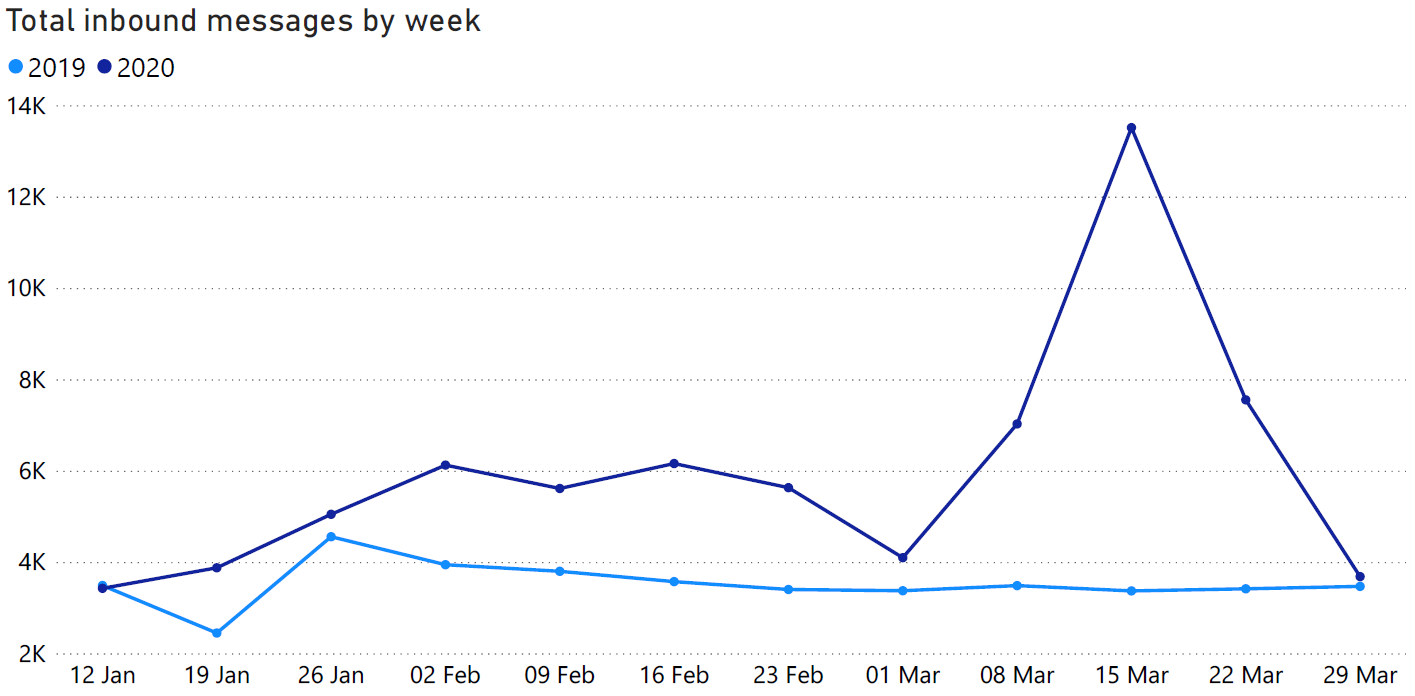
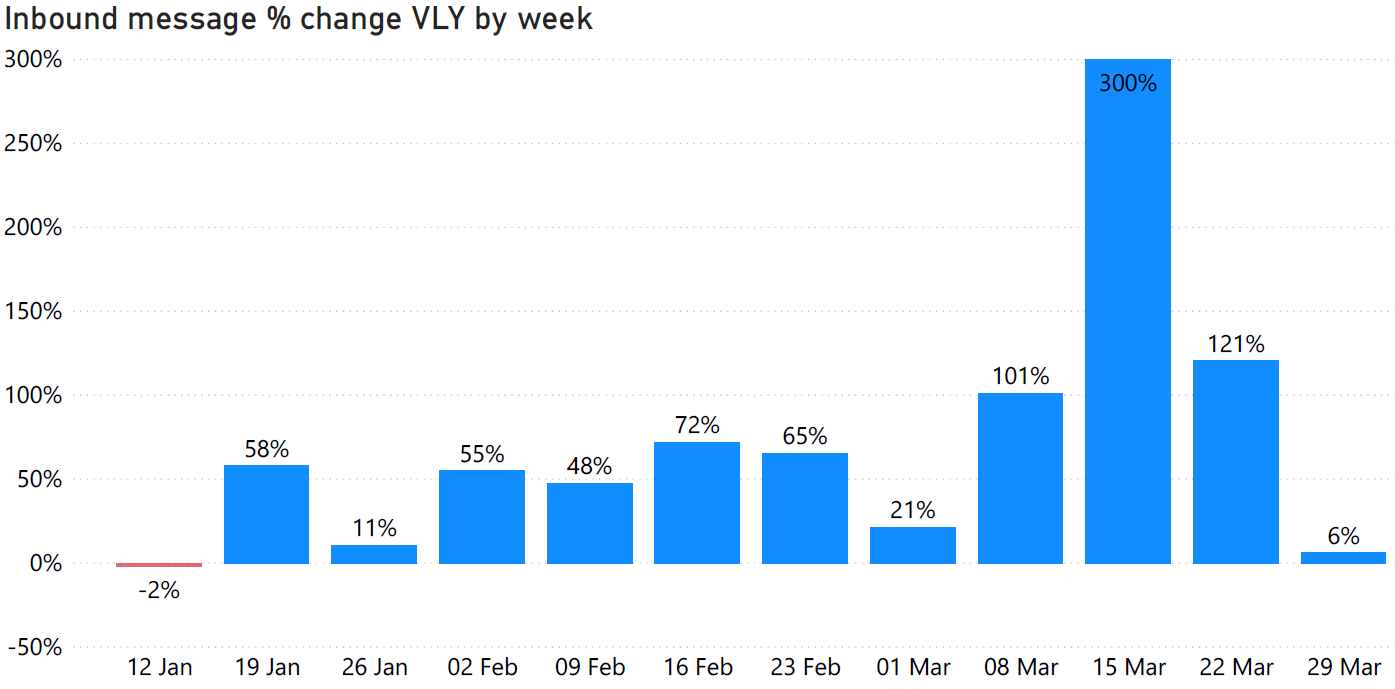
Towards the end of the Winter coordination season the volume of messages per week closely followed the levels seen in 2019. Following the increased impact of the outbreak of coronavirus however, the volume of messages received by ACL steadily increased. With alleviation of slots for the summer season granted, this culminated in an unprecedented peak in messages received, as the airlines responded by cutting back their schedules. At this peak, ACL managed over 13,500 individual messages in one week at over 40 different airports, from hundreds of different airlines.

This peak in coordination messages represented a 300% increase versus the same week in 2019, with substantial increases seen in the weeks leading up to the peak.

In addition to an increase in the volume of messages received during the peak period, the complexity of coordination also increased. This is due to unusual circumstances such as partial and full airport closures, as well as cancellation messages from airlines covering long periods of the season.

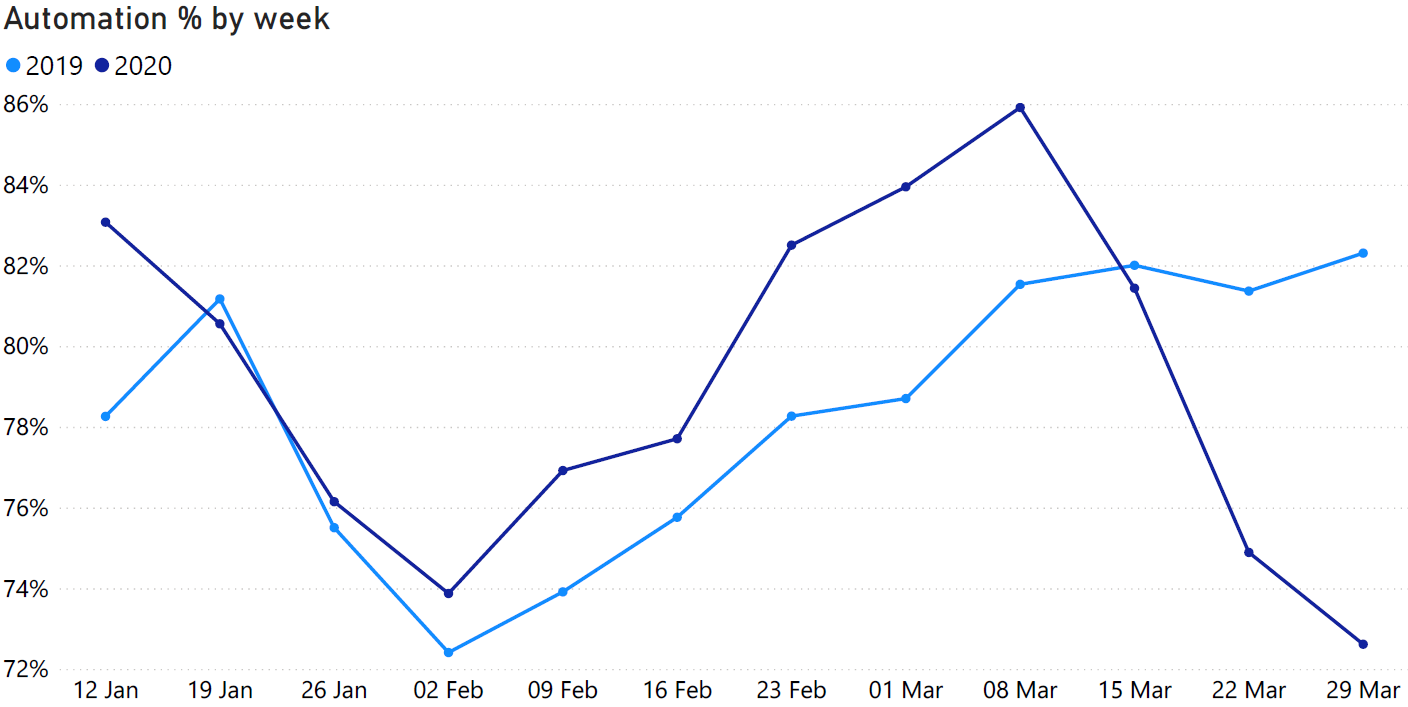
The result of this is a decrease in automation, meaning coordinators have a higher volume of messages that must be handled manually. The proportion of messages needing to be handled manually has nearly doubled.

Utilising our experience as the world’s oldest independent slot coordinator and from our frequent experience managing peak demand at airports during special or sudden events, ACL has responded to these challenges by providing flexible and efficient coordination in an extremely difficult time for the whole aviation industry.

Whilst it is likely that we have seen the initial peak of message volumes for the season, these challenges will continue. It is likely that we will see further cancellation activity in the weeks ahead as airlines adjust to changing circumstances throughout the summer season. ACL will continue to react to these challenges, benefitting from our experience and unique industry relationships, aiming to continue to provide coordination excellence in these difficult circumstances.

ACL, NATS and the IRG: Preparing for a challenging summer

As UK and European Airspace become more congested and airports look to squeeze maximum opportunity from their runway, we look at how NATS and ACL are working together through the Industry Resilience Group to better plan for the summer.

Aircraft cannot simply fly in straight lines between two points. The skies above our heads are made up of a mix of controlled, uncontrolled and military airspace. Almost all commercial airliners fly through controlled airspace where Air Traffic Control monitor and control which direction, how fast and at what altitude each flight can fly to keep passengers safe.

The controlled airspace above the United Kingdom is a set of pre-designated corridors that aircraft must follow. It was originally designed in the 1960s and in the main has remain unchanged for 50 years. As the demand for air travel has drastically increased since the 1960s, certain parts of the airspace network above the UK have come under significant pressure and it is at these airspace “hotspots” that the flow of air traffic may have to be regulated by Air Traffic Control leading to delays in flights planning to fly through regulated sectors.

For the Summer 2018 season the Voluntary Industry Resilience Group (VIRG) embarked upon trying to understand from ACL how the Coordination cycle works and if any useful information could be extracted from ACL’s schedules to highlight potential air traffic hotspots in advance. ACL and NATS worked together to create some basic high-level illustrations to show the changes in demand for the main directional flows in and out of the UK airspace versus the previous Summer.

Planning for Summer 2019

ACL’s role in the Summer 2019 process was far more involved, providing detailed schedule data for 26 UK & Republic of Ireland (ROI) airports to be combined with NATS capability at key points in the run up to the start of the season. ACL’s experience provided industry context and understanding to the data, a result of their unique proposition and close relationships with airlines and airports.

Each ACL review was made up of thousands of data entries providing information on the number of flights operating between airports. This, in combination with NATS’ own data allows airspace ‘hot spots’ to be identified ahead of time. Further analysis by week, weekday and time provide extended dimensions to the analysis, allowing NATS and the industry to understand the impact of the new schedule for the upcoming season and plan for expected congestion.

Delivering meaningful output for the industry

The outputs provided for Summer 2019 were significant in allowing the industry to better prepare for a busy summer season. The data showed a 0.4% growth against the previous summer, amounting to an increase of over 6,000 movements. Growth was strongest in the Republic of Ireland (+3.6%), with movements at London airports also higher than the previous summer (+0.5%).

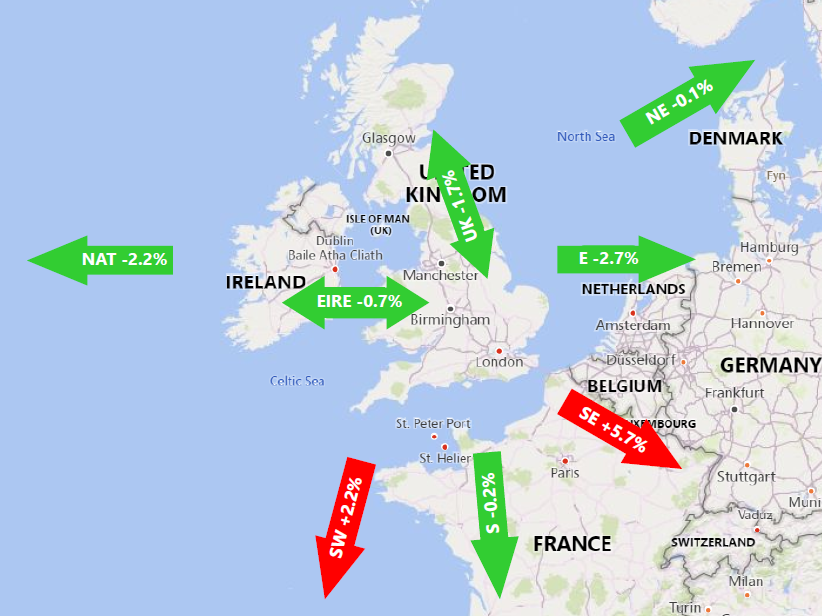
Significantly for NATS, there was strong South-East axis growth (+5.7%) which indicated further congestion expected in an already busy airspace. There was however a decline in traffic on the East axis; knowledge of these trends allowed NATS and the industry to prepare for the specific airspace challenges ahead.

ATC Routing traffic forecast for Summer 2019 as of February 20, 2019.

For Summer 2020, ACL developed its contribution further, providing additional analysis alongside the data and utilising Power BI to make process more efficient, easily understood and dynamic.

Initial Summer 2020 analysis taken at the end of November showed movement growth of 0.7%. Expected growth for 2020 was driven primarily by the rise in scheduled flights with a South-East routing which increased by over 23,000 movements. Growth on the South-East axis has been a historic issue, and so advance warning for the upcoming summer allows the industry to react to the demand.

The picture has changed significantly at the second data iteration. Data updates now show a movement decline of -1.1% against the previous summer, demonstrating how regular provision of schedule data is essential due to the volatility of schedule changes that can occur.

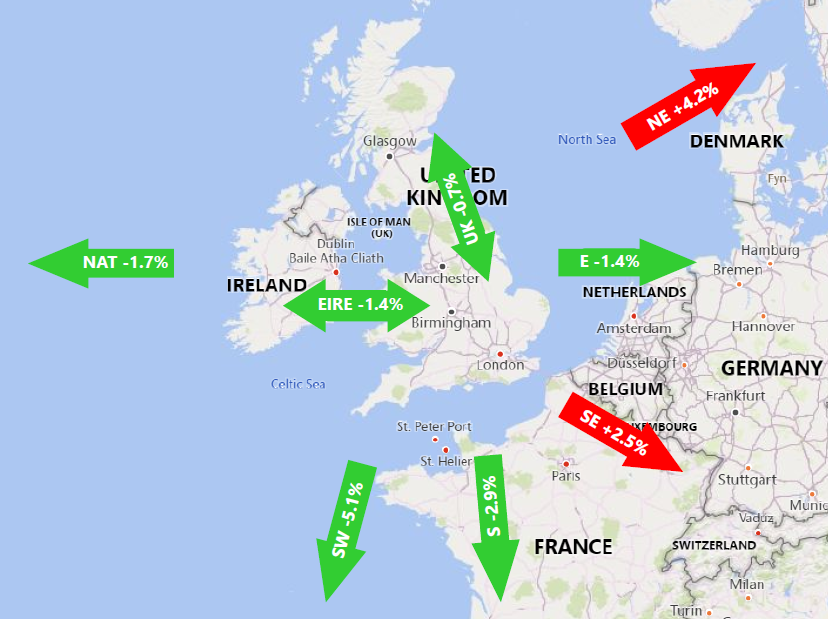
ATC Routing traffic forecast for Summer 2020 as of February 3, 2020.

Growth on the South-East axis has now decreased to only +2.5%, with more significant growth on the NE axis (+4.2%). In addition to observing overall movements and axis growth, ACL provide information at a regional and airport level. This analysis shows decline in movements in all major UK and Ireland regions, except for growth in Scotland (3.9%). An area of specific airspace interest is London airports, which currently show an overall decline in movements of -0.2% versus last summer.

Changes between data updates underline the significance of schedule movements between initial allocation and the start of the season. As such, the ability to provide iterative updates using dynamic Power BI reporting allows NATS to have better visibility of schedule changes and to observe how trends are developing ahead of the start of the season.

A developing collaboration

Analysis of forecasting accuracy for Summer 2019 indicated that the quality of predictions improved as ACL provided later data iterations, showing the importance of the continued information provided up to the start of the season.

NATS were able to utilise a far more accurate data picture as a result of the final data iteration. Looking forward to Summer 2020, it was agreed that due to the increasing accuracy of later iterations, NATS and ACL would focus on high-level trends at the first iteration, building into a more detailed picture following slot return deadlines prior to the season starting.

Several further data iterations and trend updates will be provided to NATS and the IRG up to and including the start of the summer season, with the intention of allowing the industry to continue to improve its resilience against schedule changes and airspace congestion by utilising ACL’s unique resources.

Looking ahead

As ACL and NATS continue to collaborate through the sponsorship of the IRG the level of detail and insight is increasing with each iteration. The ultimate aim is to have a level of dynamic updates which will give the industry time to plan ahead to minimise the impact of congestion, leading to better operational performance and an improved customer experience for all those using the airspace.

Click here to download a longer article of our findings

Winter Schedules: A Frosty Outlook

As the industry approaches the start of a new decade, Airport Coordination Limited looks at the winter 2019/20 season and what is looking like a cautious season for airlines.

Whereas previous winter aviation seasons have seen year-on-year growth, this year’s current picture is one of stagnation for UK aviation, with fewer movements and fewer seats being operated than last winter. Three weeks into the current season (W19), ACL scheduling data allows us to analyse the outlook for UK aviation and highlights an end to the growth that had been seen in recent winter seasons.

Despite the positive growth seen at the initial slot allocation date, currently total airline movements for the 27 UK airports served by ACL are 1.2% lower than last winter. This means that operated and scheduled movements have fallen by over 10,000, with two-thirds of airports hosting fewer flights than last year.

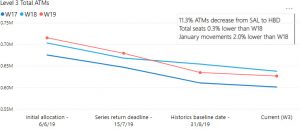
We can view the change in the number of movements at Level 3 coordinated airports over time to observe trends against previous seasons. Level 3 airports currently make up 72% of all movements for W19 and give a good indication of the current season outlook.

There appeared to be some growth for W19 at both the initial allocation date back in June and at the series return deadline in July, however a sharp decrease in movements at the hand back deadline means that the current picture is one of a distinct reduction in movements. Movements fell by 6.6% between the slot return and hand back deadlines; in comparison this decrease was only 2.1% last winter.

Comparing the current trend against previous winter seasons, we can assume that it is likely that total movements will have fallen further by the end of the season due to cancellations and non-operations, despite movements having fallen less significantly since the hand back deadline than seen last winter.

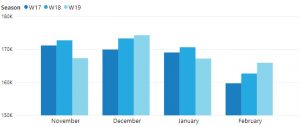
Comparing movements by month shows that the most significant decreases are seen in November and January, driven by decreases in movements at almost all Level 3 airports.

This shows airlines appearing to be cautious in these months, likely due to uncertainty in consumer demand. There also appears to be a greater variation in month to month movements than seen in previous seasons; the growth seen in December and February movements significantly contrasts with the steep decreases seen in November and January. The increased variation in movements by month suggests airlines are targeting months with known higher demand instead of months where demand can be more volatile.

The decrease in movements for the season means that total seats are also currently slightly below figures for last winter. Despite this, average seats per passenger movement has slightly increased by 0.9% to 167 for W19. This indicates that airlines are continuing the trend of upgauging their aircraft across ACL-served UK airports.

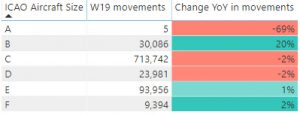
The growth in movements by larger aircraft (Code E and F) contributes to the increase in average seats per movement. It is notable that despite the significant fall in movements by the most common narrowbody aircraft, there is still a growth in movements for the season by the more efficient largest aircraft.

The number of distinct airlines regularly operating slots and the number of different destination airports serviced have both fallen. Whatever the state of Brexit, the origin and destination regions of movements have shown no significant change, with 86% of flights serving European countries.

Overall, the reduction in the number of movements and seats demonstrates stagnation for UK aviation and the effect of uncertainty in consumer demand. The volatility of movements month on month and the cautious approach of airlines contributes to an unsteady outlook for the season. Airlines upgauging aircraft and increasing movements in December and February show that airlines are targeting efficient use of slots and increased activity in periods of typically higher demand.

This winter marks a change in trends for UK airports, but observation of ACL scheduling data throughout the season and looking forward into the summer will show whether this is simply a temporary phenomenon or reflects a change in outlook for UK aviation as a whole.

By Chris Butler- Airport Capacity Analyst


London Area Set For Continued Growth as ACL Maximises the Use of Available Capacity

London’s Airports Set for Continued Growth in Summer 2019

As one of the most constrained areas in Europe, the London airports are always a challenge for airlines to gain access or increase operations. With five airports in the London area designated as IATA Level Three – Coordinated – (slot demand significantly exceeds capacity), including Europe’s busiest International airport (London Heathrow) and Europe’s busiest single-runway airport (London Gatwick), capacity has become a scarce resource that is depleting fast.

In support of increasing demand, the airports in the London area have still managed to increase runway capacity for the IATA Summer 2019 scheduling period[1]. 31 extra daily slots have been released, equivalent to 0.6% of daily slots – however, sixteen of these are at London City airport, whose major constraining factor is stand availability rather than runway availability. London Gatwick and London Luton airports had no net increase in total capacity. London Stansted, whose major constraining factor is not the runway, released fifteen extra slots across each day. London Heathrow does not have a total hourly runway capacity, and is instead constrained by its annual movement cap.

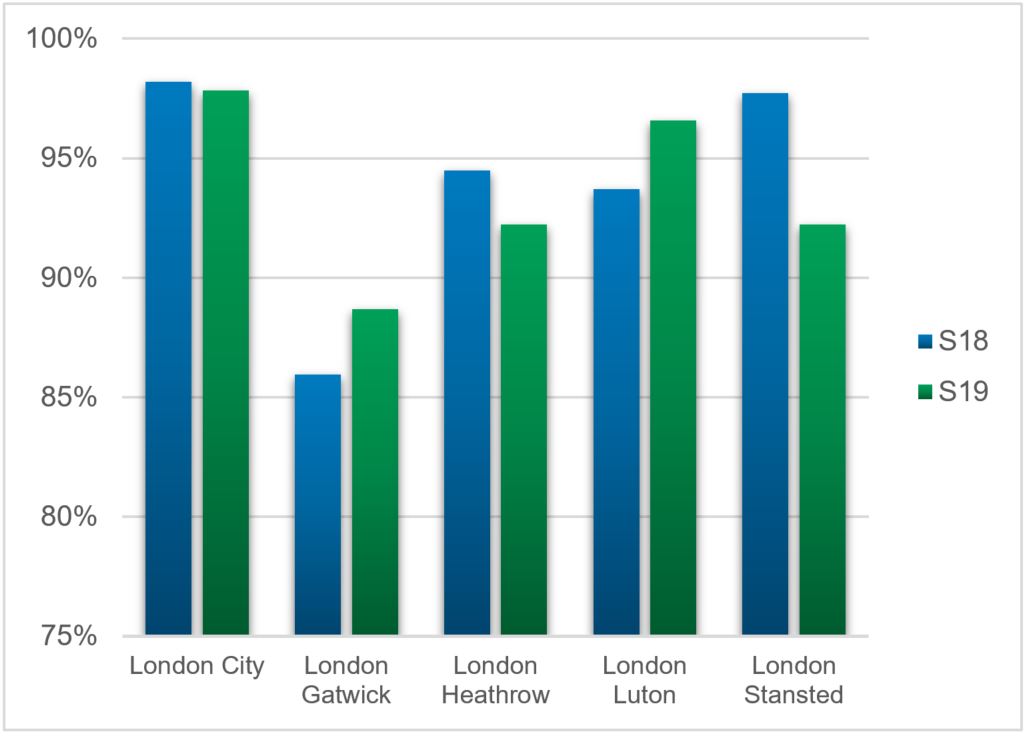
Fig 1. Slots allocated as percentage of overall demand for London Airports in Summer 2018 and Summer 2019

Following on from our Initial Coordination, the number of slots allocated across the London area has increased Summer-on-Summer[2] by 1.5%, a real terms increase of over 11,000 slots (equivalent to roughly 26 daily rotations). On top of this, we have also seen airlines trying to make best use of the capacity available to them by increasing the number of seats that they are operating for each of their slots. The number of seats allocated for Summer 2019 has increased by over 3.4m, a percentage increase of almost 2.5%. All of the London airports saw an increase in the average number of seats per movement of almost 1%. On a specific airport level the largest increase was seen by London City airport, whose projected average seat per movement has increased from 85.6 in Summer 2018 to 91.5 in Summer 2019 – a 7% increase.

In conclusion this analysis shows that, despite limited opportunity for an increase in runway capacity in the London area, ACL have been able to maximise the utilisation of available capacity and are expecting continued growth across the five IATA Level Three London airports.


Adam McCulloch
Airport Capacity Analyst
ACL


[1] 31 March – 26 October 2019
[2] S18 figures adjusted by a factor of 0.9667 due to longer season length (31 weeks in Summer 2018, 30 weeks in Summer 2019)