How Slot Management Enables Growth

“One of the most common objections I hear when discussing slot coordination is that it creates constraints. It’s an understandable concern, but in my view it actually gets the relationship the wrong way around.

Coordination doesn’t create scarcity. Scarcity already exists.

Every airport has limits. Runways have limits. Airspace has limits. Terminal capacity has limits. Aircraft parking has limits. Whether those limits are formally recognised or not, they are still there.

The real question isn’t whether constraints exist. The real question is how those constraints are managed.

Without coordination, demand naturally gravitates towards the most commercially attractive periods. Airlines understandably want the busiest times of the day. As more and more demand accumulates around those peaks, congestion increases, delays become more common and operational performance starts to suffer.

At first glance, that can look like growth. More flights are being scheduled and everyone appears to be getting access. The challenge is that the inefficiencies don’t disappear. They simply emerge elsewhere in the system through delays, holding patterns, increased aircraft taxi times, increased fuel burn, schedule buffers, higher operational costs, passenger misconnections and a poorer experience for passengers.

Coordination takes a different approach.

Rather than allowing congestion to sort itself out on the day, it provides a framework for managing demand against the capacity that is genuinely available. It allows airports, airlines and operators to work from a realistic understanding of what can actually be delivered.

Importantly, the goal is not to restrict growth. The goal is to maximise achievable capacity while protecting operational performance.

Good coordination helps airports extract more value from existing infrastructure. Before spending billions on new runways, terminal expansions or additional facilities, airports can better understand how efficiently their current assets are being used and where opportunities for optimisation exist.

That doesn’t mean investment can be avoided forever. Most airports will need to expand as demand continues to grow. But coordination can help ensure those decisions are made strategically rather than reactively, optimising the timing of investment to align with demand and operational needs.

As our industry continues to face growing demand and increasing pressure on infrastructure, I believe the conversation needs to evolve. Because when coordination is done well, it doesn’t restrict growth. It creates the certainty and efficiency that sustainable growth depends upon.”

–

Darren Batty is the Coordination Manager for ACL Asia Pacific, leading slot coordination activities at Sydney Airport. With more than 25 years in the aviation industry, he works with airlines, airport operators, regulators, and industry stakeholders to optimise airport capacity, improve operational performance, and support sustainable growth.
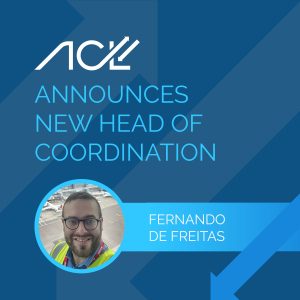

ACL Announces New Head of Coordination

ACL is pleased to announce the appointment of Fernando de Freitas as Head of Coordination, marking the next chapter in a career spanning more than 15 years with the company and over two decades in aviation.

Having joined ACL as a Coordinator, Fernando has progressed through a range of roles across the organisation, supporting airports and projects in the UK, Dubai, Saudi Arabia, Luxembourg, Abu Dhabi and Sydney. His experience provides a strong foundation for leading ACL’s global coordination operation.

As Head of Coordination, Fernando will oversee ACL’s worldwide coordination services, ensuring the continued delivery of high-quality coordination for a growing and diverse customer base.

“The job is very different because it’s more about overseeing the whole delivery of the operation while staying within the regulatory framework and delivering coordination excellence.”

Customer focus and adaptability are central to Fernando’s vision for the role.

“It’s about making sure that we as a team deliver something that our customers are proud of, something where they can really tell the difference between what we are and another coordinator. We’ve got different regulations, different cultures and different requirements. It’s about being adaptable to where we are with our customer profile.”

Looking ahead, Fernando explains:

“There’s opportunity to develop our people within the coordination team and improve customer experience. We can’t just stand still because we’ve done things a certain way for 35 years.”

“We need to support how we make the best use of capacity while contributing to the future direction of slot coordination. Whether that’s artificial intelligence or whatever comes next, we need to be part of that conversation.”

Fernando’s appointment forms part of a wider evolution of ACL’s leadership team following the promotion of Richard Cann to Director of Coordination, where he will focus on the strategic, regulatory and industry developments shaping the future of ACL’s coordination services.

Commenting on the appointment, CEO Neil Garwood said:

“At ACL we’re continually investing in our people, our systems and our ability to keep pace with a changing world. The emphasis we place on training and development is second to none, so it’s great to see these team changes and especially Fernando’s appointment into this leadership role.”

Everyone at ACL congratulates Fernando on his appointment and looks forward to supporting him as he leads the next chapter of ACL’s coordination operation.

Bringing the Board Closer to the Business

One of ACL’s Independent Directors, Deb Bowen Rees, recently joined our Coordination team alongside Nominated Director Brendan Kelly (TUI) as part of a Board development programme designed to strengthen understanding and connection across the business.

With a career spanning the RAF, executive leadership roles and her time as CEO of Cardiff Airport, Deb brings extensive aviation and transport expertise to ACL’s Board. The programme aims to give Board members a deeper understanding of ACL’s operations and the people behind them. As Deb explained, ACL’s structure means Board members do not always have the same opportunities for day-to-day interaction found in other organisations, making purposeful engagement especially important.

Before the visit, Deb and fellow Board members completed theory sessions led by Stuart Finlayson, covering airport coordination and its vital role within the aviation industry. The office visit provided an opportunity to see this knowledge in practice.

During the day, Deb spent time with Head of Coordination Fernando de Freitas and colleagues from across the business. Reflecting on the experience, she highlighted the value of seeing ACL firsthand. Observing customer interactions, learning about operational processes and hearing directly from employees gave her a greater appreciation of the expertise, dedication and teamwork that drive ACL’s success.

“I was amazed at what we managed to pack in,” she said, describing the experience as both insightful and rewarding.

The visit also allowed colleagues to learn more about the Board’s role. During an open Q&A session, employees asked questions about governance, strategic decision-making and how the Board supports the company’s long-term success. These conversations helped strengthen understanding and transparency across the organisation.

For Deb, this kind of engagement benefits everyone. Board members gain a clearer understanding of the business, while employees gain insight into how decisions are made and the experience Board members bring. Having previously attended ACL company away days, Deb stressed the importance of continuing these opportunities.

“It shouldn’t be a one-off. Maybe once a year, Board members should be encouraged to do it, because it really is invaluable.”

The visit reinforced the importance of staying connected. Effective Board members do more than attend meetings; they take time to understand the business, its people and its challenges. By encouraging meaningful conversations and shared learning, initiatives like this help strengthen relationships across ACL and ensure the company continues to benefit from the collective expertise of its people and leadership.

A huge thank you to Deb for spending the day with the Coordination team and sharing her insights. The feedback from colleagues has been overwhelmingly positive, and we look forward to building on these connections in the future.

Why Coordination Matters More Than Ever

“A question I’ve been thinking about a lot lately is this: when airport demand keeps growing, what comes first? More infrastructure or better coordination?

The default answer is often more infrastructure. More gates, more terminal space and more runway capacity. But building infrastructure is expensive, complex and slow. In many cases, there are years between identifying a capacity issue and delivering a solution. In the meantime, airports still need to maintain performance, support growth and deliver a good experience for airlines and passengers alike.

To me, that’s where coordination becomes critical.

As airports grow, they inevitably start seeing pressure points emerge. Morning peaks become busier, infrastructure reaches its limits for short periods and demand begins clustering around the same preferred times. At that point, the challenge isn’t necessarily creating more capacity. It’s about making better use of the capacity that already exists.

A simple way to think about it is a restaurant. If every customer wants a table at 6pm, the answer isn’t automatically building a bigger restaurant. First, you’d look at how bookings are managed, how demand can be spread across the evening and how you can provide a better experience with the resources already available.

Airport coordination works in much the same way. It’s not about restricting growth. It’s about helping airports achieve sustainable growth while maintaining performance, reliability and service levels.

Demand growth isn’t the problem. Managing that growth effectively is the challenge. That’s why coordination matters more than ever.”

Darren Batty is the Coordination Manager for ACL Asia Pacific, leading slot coordination activities at Sydney Airport. With more than 25 years in the aviation industry, he works with airlines, airport operators, regulators, and industry stakeholders to optimise airport capacity, improve operational performance, and support sustainable growth.
The Power of a Slot

“I’ve spent a lot of time talking to airports, airlines and industry stakeholders about coordination, and one thing I’ve realised is that many people underestimate the value of a slot.

To some, a slot simply looks like a scheduled arrival or departure time. It’s an operational requirement. A timestamp on a schedule. A necessary process to manage demand.

In reality, it’s much more powerful than that.

A slot creates certainty, and certainty is one of the most valuable commodities in aviation. Once an airline knows when it can arrive and depart, it can align everything else around that operation. Ground handling, crew scheduling, aircraft parking, aircraft movements on the ground and in the air, catering, check-in, baggage systems, passenger flows and onward connections can all be planned against a known outcome.

Without that certainty, every part of the operation starts compensating for risk. Airlines build buffers into schedules. Resources are allocated less efficiently. Delays in one area have a habit of creating delays elsewhere.

I sometimes think of a slot as the foundation stone of an operation. Once it’s in place, everything else can be built around it with confidence. Without it, you’re constantly trying to line up a complex series of moving parts, often with limited visibility and no guarantees.

The value of a slot isn’t the time itself. The value is the certainty it provides to everyone who depends on it.”

Darren Batty is the Coordination Manager for ACL Asia Pacific, leading slot coordination activities at Sydney Airport. With more than 25 years in the aviation industry, he works with airlines, airport operators, regulators, and industry stakeholders to optimise airport capacity, improve operational performance, and support sustainable growth.

The Hidden Cost of Not Coordinating

“When people hear the word congestion, they usually think about delays. What they don’t always see is everything happening behind the scenes.

An airport without effective coordination doesn’t magically avoid constraints. Those constraints still exist. The difference is where the cost shows up.

Aircraft spend longer holding in the air waiting for a landing opportunity or on the ground waiting for a gate to free up. They spend longer at the gate or taxiing on the ground before departure. Airlines start building additional buffers into their schedules because they know certain delays are likely to occur. Passengers experience longer and less predictable journeys. Operational teams spend more time responding to disruption rather than managing performance proactively.

Eventually, somebody pays for those inefficiencies.

The airline pays through higher operating and passenger disruption costs. The airport pays through reduced operational performance, lower infrastructure utilisation and customer satisfaction. Passengers pay through delays and uncertainty. The environment pays through additional fuel burn and unnecessary emissions.

One of the biggest misconceptions in our industry is that coordination creates constraints. In reality, coordination helps manage constraints that already exist. Without coordination, congestion gets resolved on the day through holding patterns, delays and operational workarounds. With coordination, much of that congestion can be managed before the day even arrives.

That’s a very different outcome.

Good coordination isn’t simply about operational efficiency. It’s about creating better outcomes across the entire airport ecosystem, from airlines and airports through to passengers and the communities they serve.”

Darren Batty is the Coordination Manager for ACL Asia Pacific, leading slot coordination activities at Sydney Airport. With more than 25 years in the aviation industry, he works with airlines, airport operators, regulators, and industry stakeholders to optimise airport capacity, improve operational performance, and support sustainable growth.
UK Alleviation related to fuel related issues: Update on permitted slot returns for NW26

ACL guidance on UK Alleviation related to the fuel situation has been updated to include the number of permitted slot returns for Northern Winter 2026 (NW26).

The UK Government amended the Slot Regulation to permit additional alleviation to manage potential fuel shortages at UK Level 3 Coordinated Airports.

For NW26, carriers are permitted to return 10% of slots subject to certain criteria. The first 5% are to be returned to the coordinator by 15 November 2026.

A further 5% is permitted to be returned before 14 March 2027.

For Northern Summer 2026, carriers can return up to 5% of slots if they are returned before 11 October 2026.

ACL Guidance related to this alleviation can be found here

ACL Update on the Middle East Conflict

19 August 2026

Operations in the Middle East have seen some stabilisation despite disruption continuing in some countries/airports.

ACL has updated its Guidance on Military action and related airspace restrictions over the Middle East and Gulf Region to reflect its view on which countries/airports are no longer experiencing serious disturbance and therefore detailing that date at which alleviation will no longer be applied . see here for the latest version (10).

For UK Airports:

  • The UK Government has amended the UK Slot Regulation to provide additional alleviation during NS26 and NW26. Additional guidance related to this provision can be found here.

For Dubai Airports:

  • Reduced capacity will impact the airport for the remainder of the NS26 season.


Behind the Scenes at a Slot Conference

For ACL Coordinator Jamie Whyte, slot conferences are one of the most rewarding aspects of his role, bringing together airlines, airports and aviation professionals from across the globe.

“Everyone is there for the same reason – to plan, discuss challenges and make sure future schedules work as effectively as possible.”

While the conference itself may only last a few days, months of preparation take place behind the scenes. Coordinators work closely with airports and airlines, reviewing requests, assessing capacity and preparing for countless discussions ahead of the event.

“There’s a lot more preparation involved than people realise. The conference is the visible part, but there’s a huge amount happening before you even get there.”

Once the conference begins, the pace quickly intensifies. Meetings run back-to-back throughout the day as airlines and airports discuss schedules, capacity constraints and plans for the season ahead.

“You’re helping people understand what’s possible, what’s challenging and what options might be available. Sometimes it’s about finding solutions, and sometimes it’s about helping everyone understand the bigger picture.”

These conversations provide valuable insight into the priorities and challenges faced by different stakeholders across the aviation industry.

“You get to hear directly from airports and airlines about what they’re dealing with. It gives you a much broader perspective than you can get from a screen.”

For Jamie, the opportunity to travel is a major highlight of the conference and was one of the reasons he was initially drawn to the role. Coordinators can make the most of visiting destinations they might not otherwise have the chance to experience.

“The travel is a huge benefit of this role with ACL. If you’re travelling halfway across the world for a conference, being able to add a bit of personal time onto the trip and experience a new city or culture makes it even more rewarding. It’s great that we have the flexibility to do that.”

For Jamie, that combination of technical expertise, relationship building and international travel is what makes slot conferences so unique.

While attendees may see a busy schedule of meetings, for coordinators it represents the culmination of months of planning, collaboration and industry engagement. Much of the work happens behind the scenes, but it plays a vital role in helping airports and airlines prepare for successful future seasons.

Special Event Coordination: Hajj 2026

Supporting Hajj is a powerful example of ACL’s expertise in Special Event Coordination. Let’s take a moment to reflect on the incredible scale, complexity and global collaboration required to support one of the world’s largest annual gatherings.

Our team were working for seven months behind the scenes, managing significant demand from airlines while aligning with strict regulatory requirements and carefully controlled capacity at the Hajj Terminal in Jeddah Airport.

This year’s operation saw:

• 4,949 Hajj charter slots and 989,567 seats coordinated
• 59 airlines involved
• 67 countries connected
• All coordinated against 893 quota constraints

Together, the team processed all Hajj-related slot messages alongside an additional surge in slot messages and enquiries related to the recent Middle East conflict, and delivered the operational arrival phase alongside the NW26 initial coordination period. The scale of the operation is immense, with tightly managed quotas governing both aircraft movements and passenger volumes, all set in collaboration with GACA (General Authority of Civil Aviation) Saudi Arabia and the airport operator. Every request must be carefully handled, with no margin for error, and systems configured to reflect the unique nature of Hajj operations, from dedicated charters to adapted scheduled services.

We also recognise the exceptional work of the Matarat airport teams and wider partners in Saudi Arabia. The organisation and management of the Hajj Terminal, and the wider infrastructure that supports the movement of pilgrims, is unlike any other airport operation.

Events like this demonstrate our ability to manage highly complex, high-pressure scenarios, work closely with international partners, and deliver coordinated solutions for events of global significance.

Well done to everyone involved – let’s get ready for Hajj 2027!