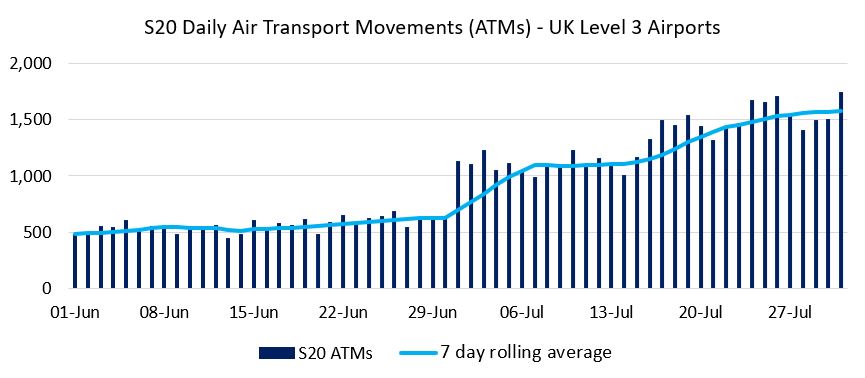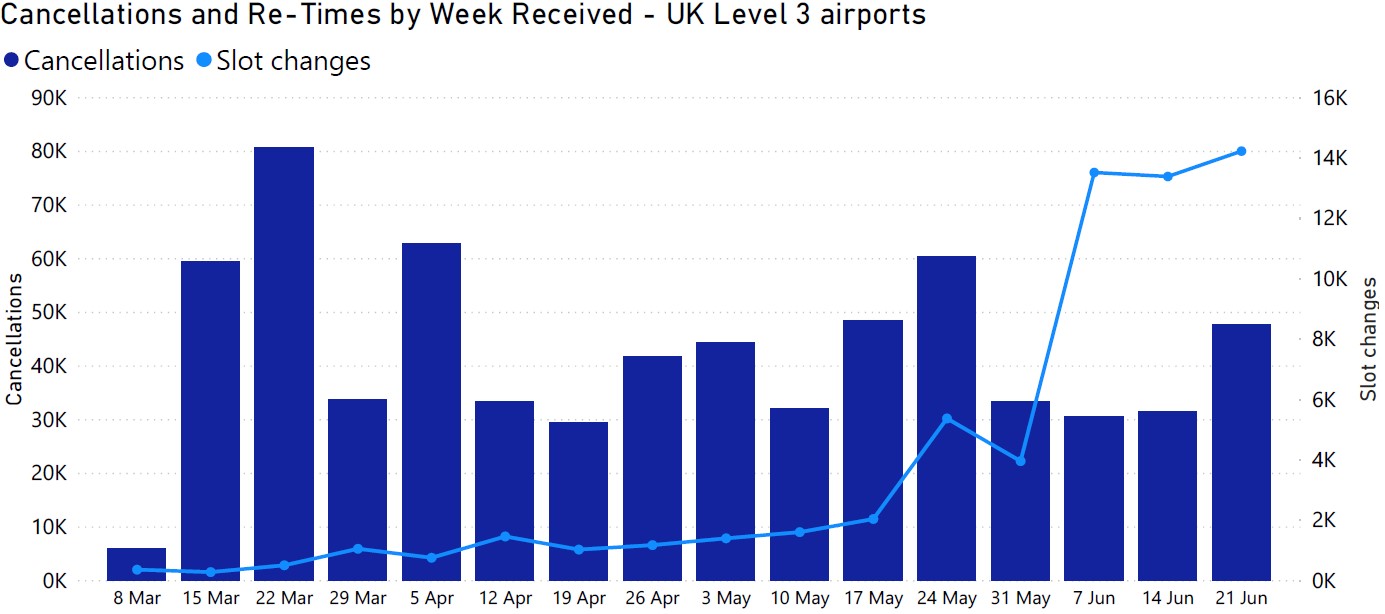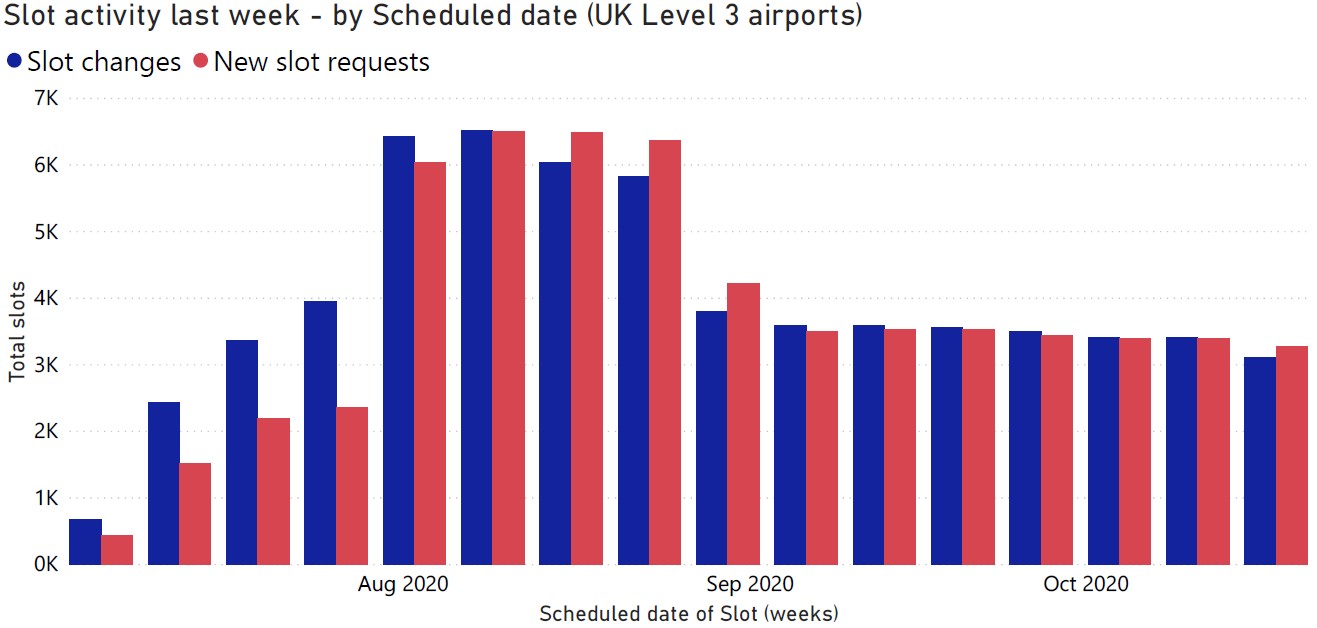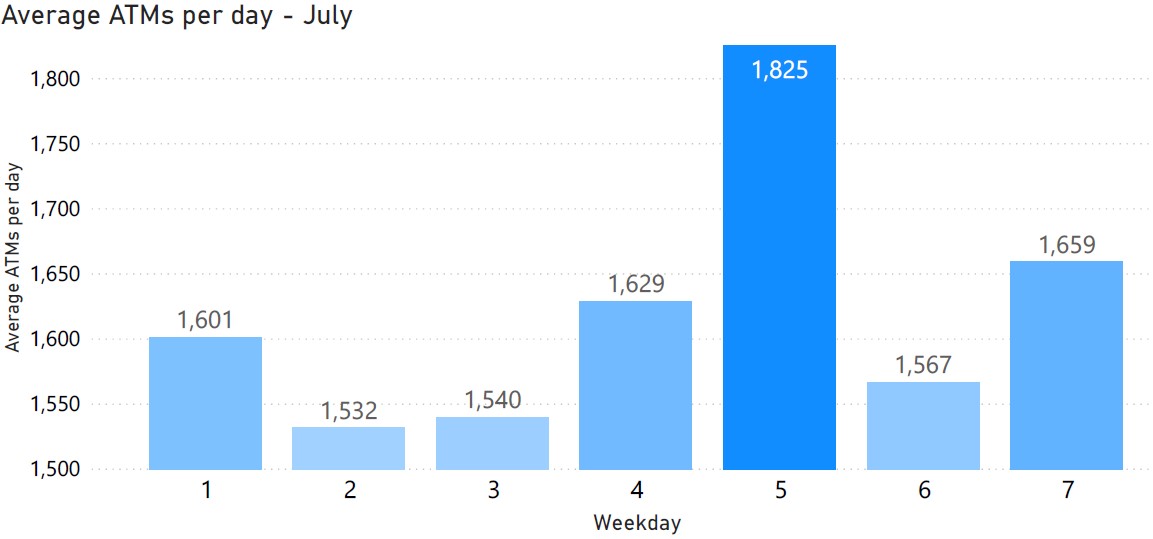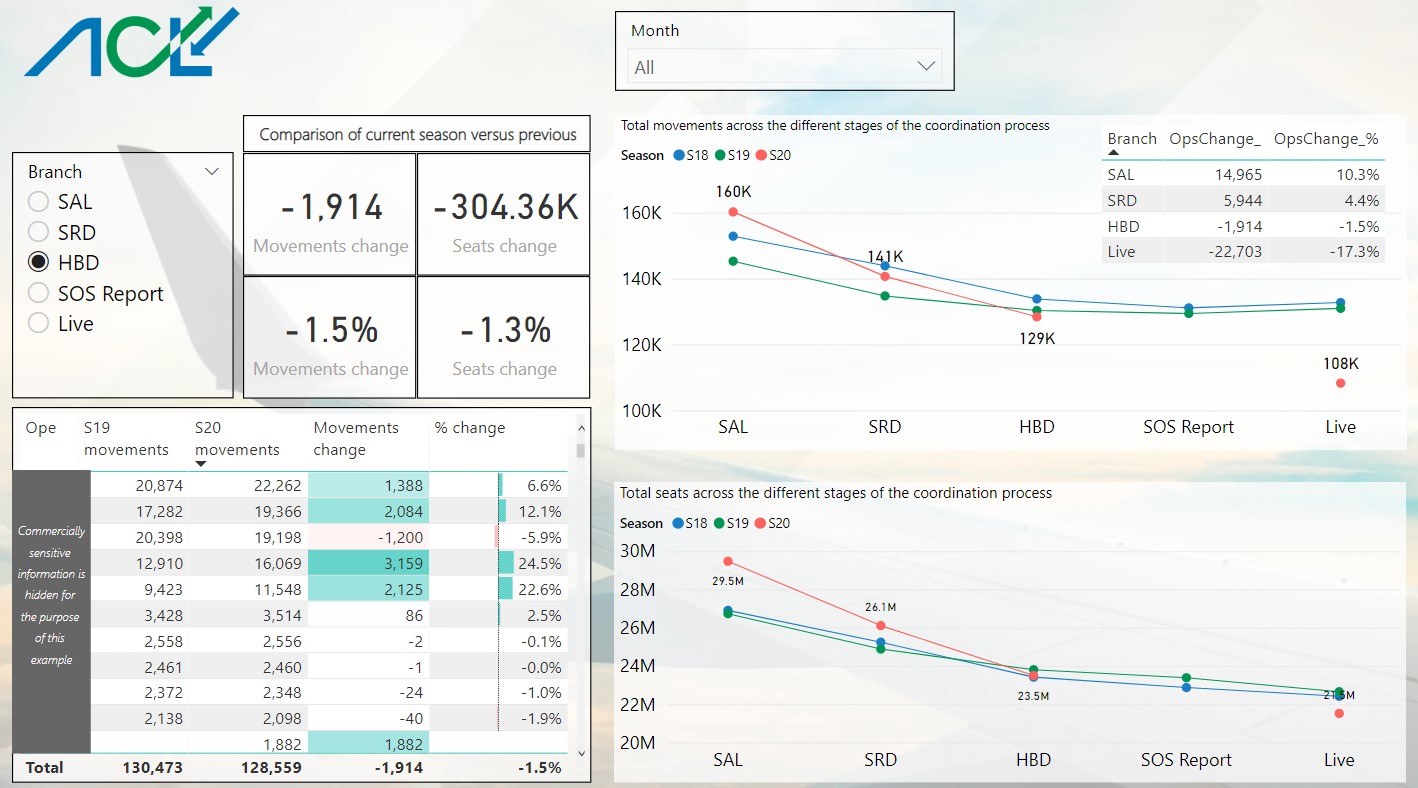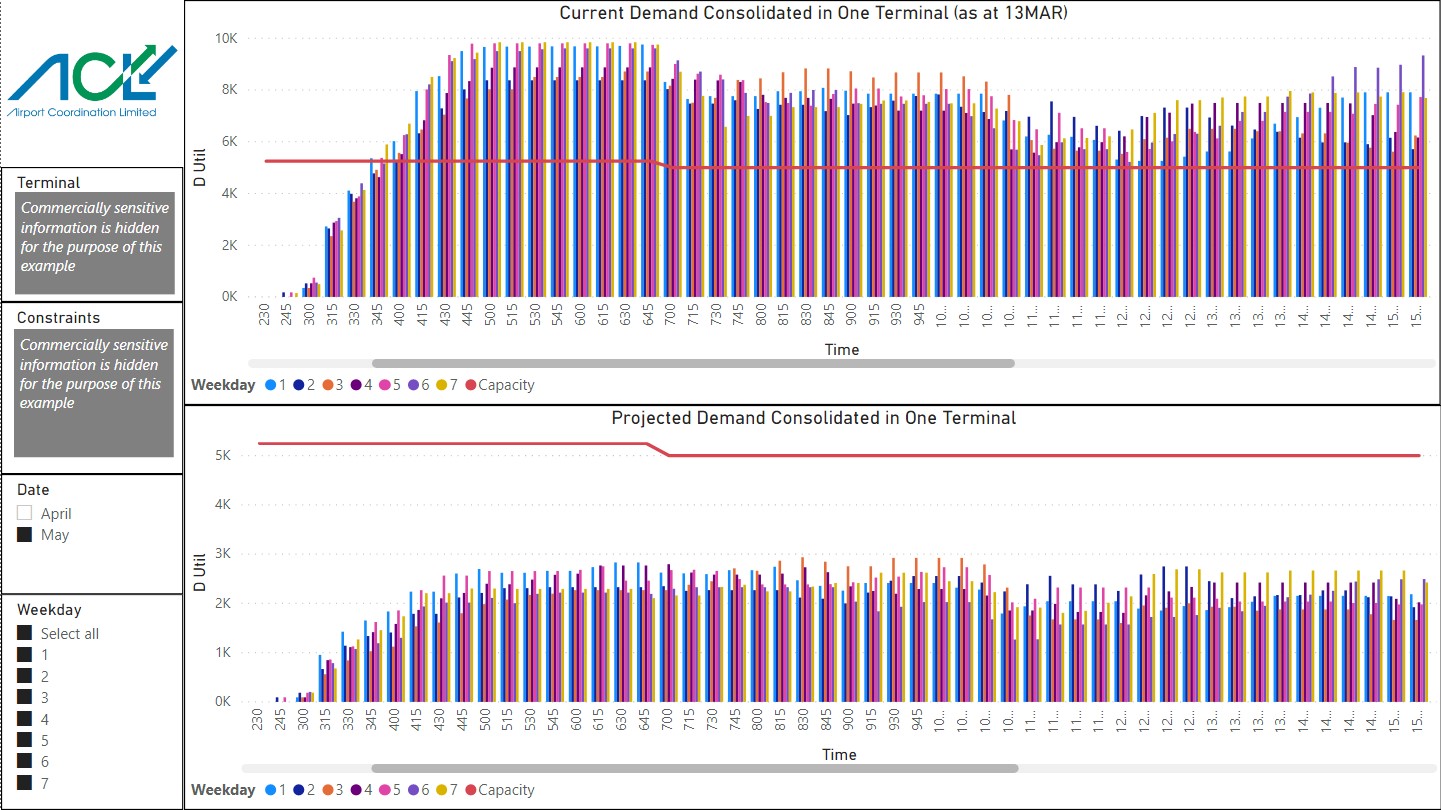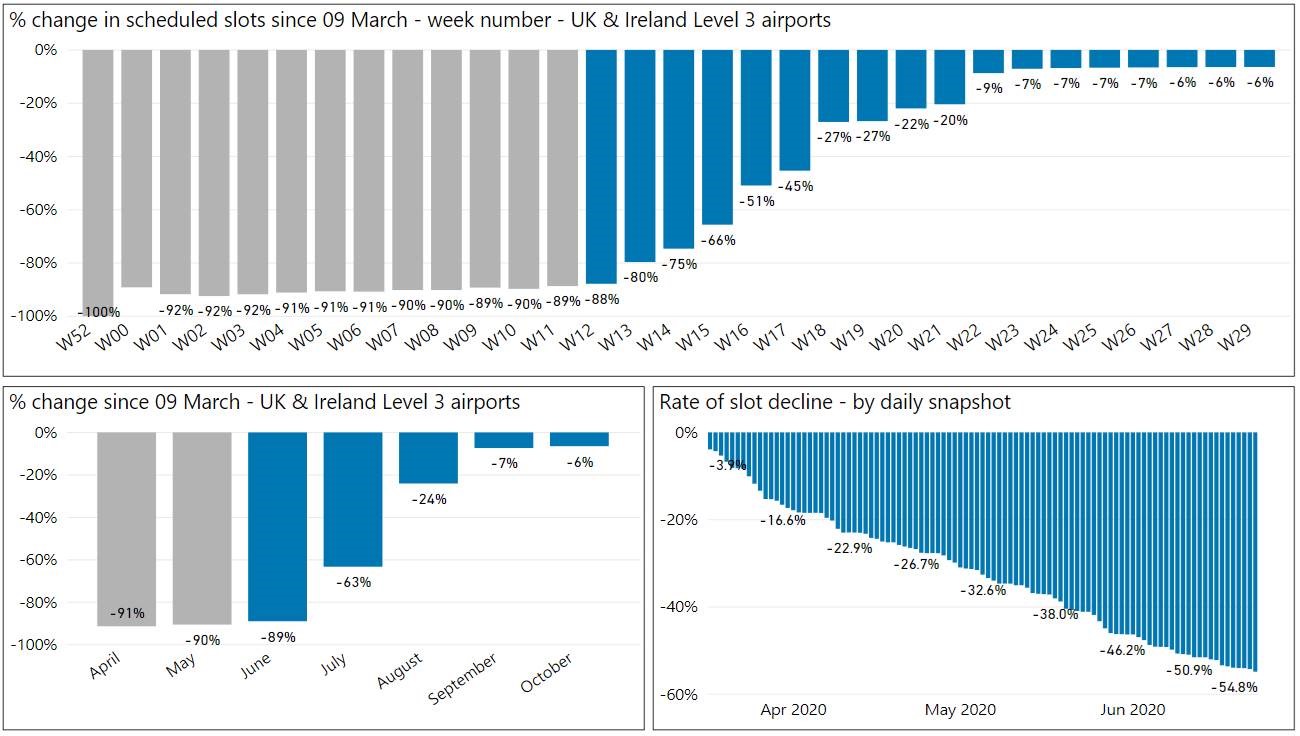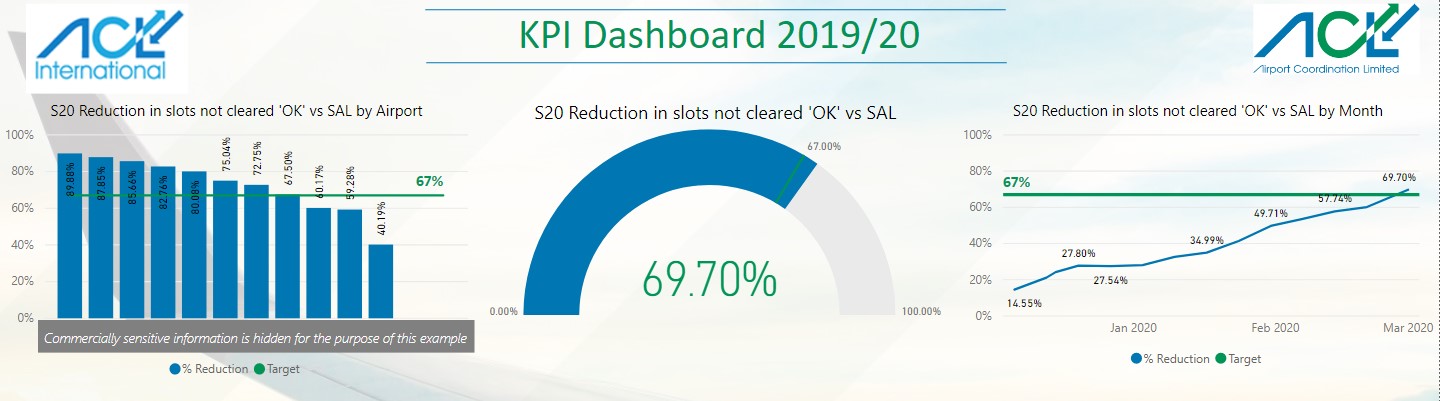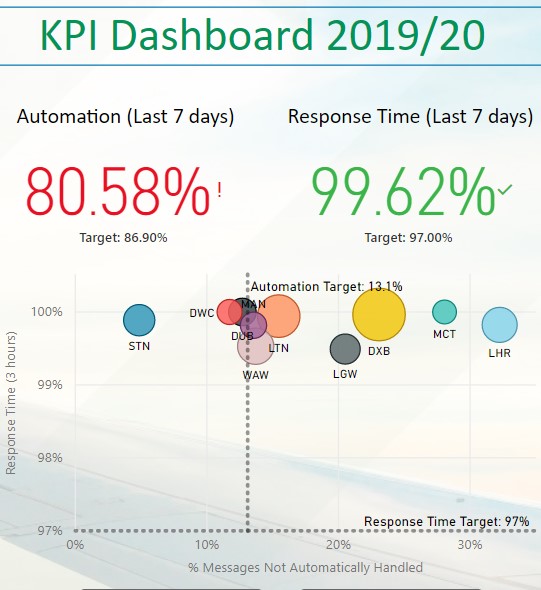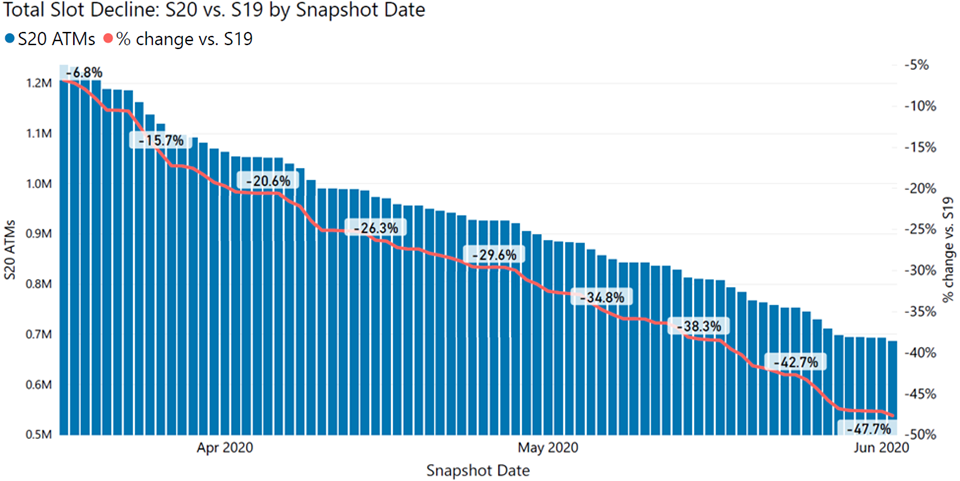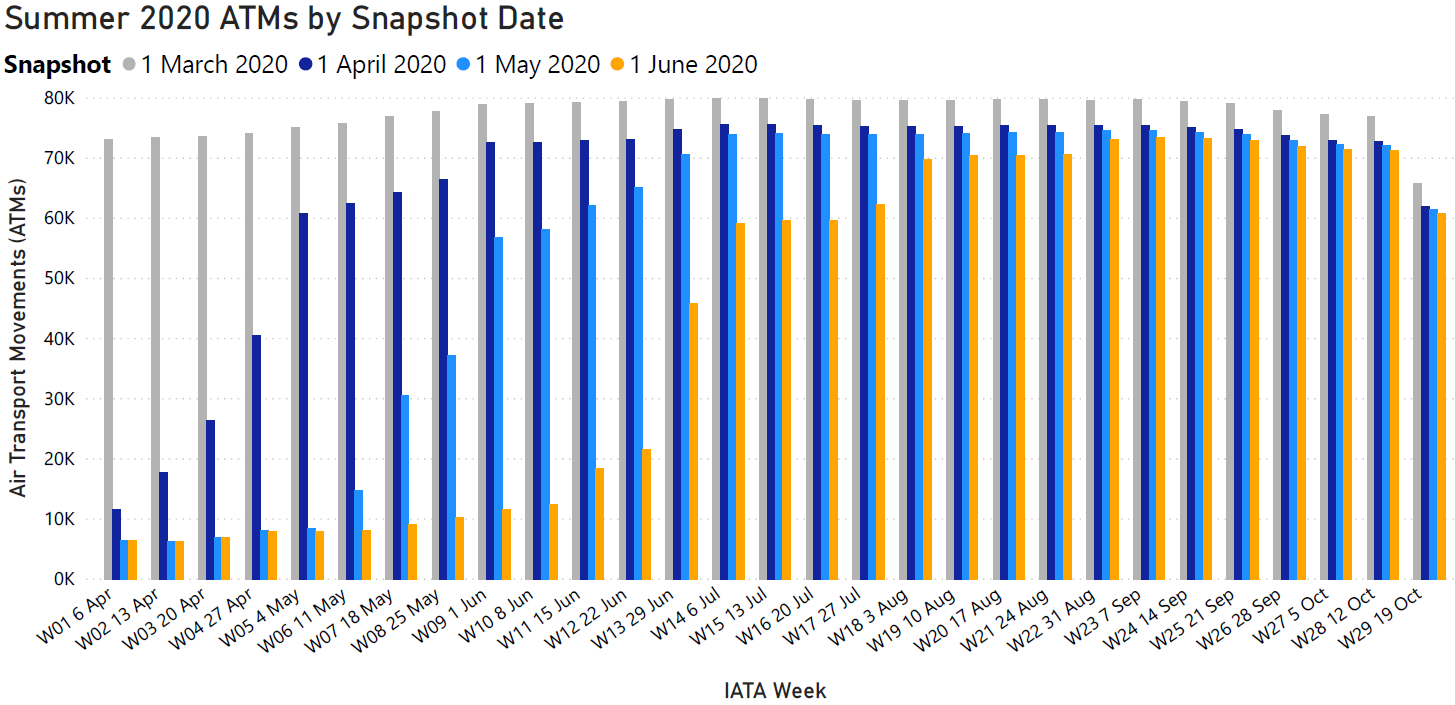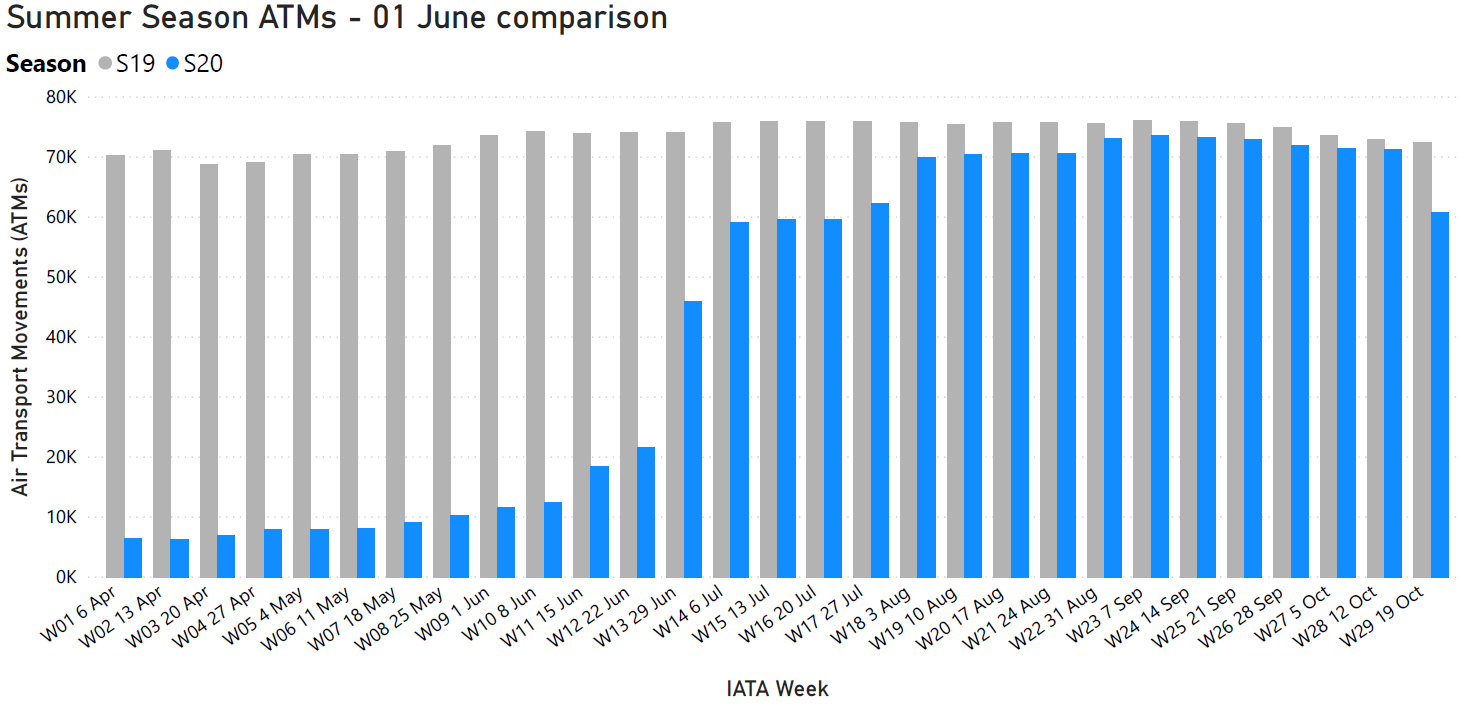
All W20 SALs for ACL airports have now been distributed. Please contact the coordinator if you have not received the message for a particular airport.
News Category: Coordination
How to coordinate an airport from your daughter’s bedroom
01/06/20Our experienced coordination manager, Pete Robinson, recalls his working from home journey and how he has coordinated some of the worlds busiest airports from his daughters bedroom.
Shortly before the UK went into official lockdown, I spent a day in mid-March touring London’s airports. Aviation was just beginning to slow down, and I was conscious of the noticeable reduction in movements and the presence of stationary aircraft at Stansted, Luton, Heathrow and Gatwick.
On the second day of the lockdown I celebrated 15 years at Airport Coordination Limited (ACL). During those years I have experienced closures and disruption of all kinds from severe weather, natural disasters, terrorism, conflicts and the grounding of aircraft fleets. Even the week-long closure of European airspace due to an Icelandic volcano in 2010 pales into insignificance next to the impact of Covid-19 on the worldwide aviation industry.
The first week of working from home was strange. I usually spend two and a half hours a day on my M25 commute and contrary to most, I was strangely experiencing withdrawal symptoms. I had to accept, with the schools closed, and my partner also working from home, finding a quiet place to work was going to be difficult. Luckily, only a few months earlier, we had bought each of our girls’ desks for their bedrooms and so, kicking my 5-year-old out, I began coordinating slots from my daughter’s bedroom, with her surrounding toys for company.

So how do you coordinate some of the worlds most complex airports when your whole team is working from home? Less than 12 months earlier, ACL had invested in Microsoft Teams and trained all our staff in its use. Whilst its need had been limited before, this investment truly paid off. Video calls, screen and document sharing are the new norm across ACL. Guests from outside our organisation can easily join video calls and it has allowed us to provide the same level of communication with our customers in other remote locations. Each week ACL’s CEO, Edmond Rose, hosts a Q&A session and updates us on company affairs, and colleagues take it in turns to host regular afterwork quizzes, helping to maintain social contact with the wider ACL team.
During lockdown, I begin each morning running reports for the four international airports I manage. This helps me understand the schedule movements from the last 24 hours. I monitor travel restrictions, UK Foreign and Commonwealth travel advice and the international press for any significant developments. I then correlate these against the schedule changes we have received from airlines. This information is then fed to the rest of my team via my daily Teams update. Communication with colleagues has certainly changed, but video calls have allowed us to continue enjoying face-to-face interaction. I have a daily call with my Head of Coordination and then a further call between myself and my own team. These calls are crucial for relaying updates and activity across ACL and are an opportunity to agree any actions for the coming days.
My usual morning tea break with colleagues has now been replaced with a short stroll around my garden and tending to my plants. Some great weather and the additional time at home has left my garden looking in fine shape. What started as a home-schooling project, growing some vegetable seeds with my daughters, has developed into a gardening obsession, and I have proudly been sharing updates with my colleagues on my horticulture successes.


The evolution of my horticultural obsession.
A further highlight has been the successful roll-out of virtual coordinator training. My initial nerves over conducting training online have not been met and Teams has allowed me to share my screen with multiple users demonstrating tasks, encouraging discussions, and continuing the high level of training we provide to our coordinators.
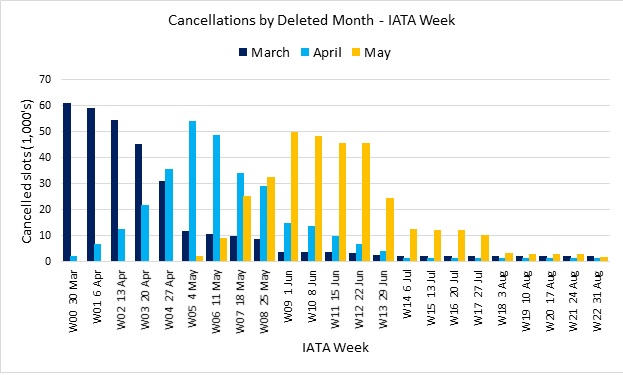
After two months of daily cancellation activity across ACL’s airport portfolio, we are beginning to see signs of easing across Europe and there are indications that planes may return to the skies. One thing is for sure, the Summer 20 season will look very different from how it was first coordinated. The industry continues to consider how social distancing can be enacted and without concreate plans or guidance, it remains difficult to predict how demand and capacity will look in the coming twelve months.
So, as many of us adapt to the new normal, I have found myself a more suitable home and am coordinating from our spare bedroom, which I have temporarily converted to a home office. Working from home is staying a little while longer, but ACL will continue to provide our expert coordination services from whatever locations our staff find themselves, and we will continue to be both proactive and reactive to the challenges ahead.

By Pete Robinson
Starting at ACL during Covid-19
13/05/20ACL’s newest recruit, Wade Chan, discusses what it’s like starting a new job during a nation-wide lock-down.

On March 18th I received joining instructions from Marion, reconfirming my new role as a Coordinator at Airport Coordination Limited (ACL). To the amusement of my then colleagues, my start date was April 1st, April Fool’s Day; making them joke I had accepted a prank job. Whilst, I knew this was not true, with COVID-19 beginning to impact many jobs in aviation, I did start to worry.
The UK went into lockdown the following week and I began to consider if a new job was a wise decision. A few days later an email from ACL pinged on my phone ‘Change of joining Instructions’: my heart sunk. Expecting the job to be put on hold, I was relieved to read that my arrival time had merely been adjusted to a new time.
By the time I received my next email a week later my heart was pounding, and I delayed opening it for several hours. Again, my fears were misplaced, and it was simply another information update. I began to feel more confident. ACL were an organised company and I was looking forward to a new start in a new job.
April 1st came and mercifully it was not an April Fool’s joke! With great excitement, I entered ACL’s office and was immediately struck by its emptiness. A man quickly appeared with a welcoming smile and introduced himself as Richard Cann, Head of Coordination. Richard gave me a quick run down of the company, his job role, the plan for my induction and how I would immediately be working from home. Communication between the company was taking place across Microsoft Teams. Richard bought up the programme and demonstrated a call to Ingrid Hainy, my new line manager. Soon after I was given a work laptop and shown how I could access our system remotely. Within an hour I was back home; I had met only one colleague and was continuing my first day from my living room.
I successfully managed to log into the company VPN and made my first Teams call to my new manager. It was strange communicating in this method. Ingrid was extremely organised, welcoming and had crafted a whole training schedule via Teams. I met my first teammate online, Kavi Ghanasegaram, a coordinator like me. I would be shadowing Kavi to get an idea of what coordination involves. It was interesting to see how the slot system worked. Ingrid then began teaching me SSIM training and on my third day a meeting was arranged for me to meet ACL’s CEO, Edmond. Throughout my working life, I have never met the CEO of a company I worked for. To meet a CEO, almost in person, was another first for me; Edmond was very friendly and supportive.
My next week could be summarised as meetings galore! I met various members of ACL’s management and learnt about their roles. My first team meeting felt strange and I had little clue what was being discussed but working alongside Kavi made understanding and learning easier. Any issues were just a Teams call away; this made settling in easy despite being at home. Shahbaz Bhatti, another coordinator, was to be my daily trainer and mentor. Training sessions with him are very precise and detailed. Distance training feels odd initially but is easily adaptable.
A month on in my coordination role at ACL I feel comfortable handling messages. I was even entrusted with the responsibility of running Heathrow’s operation for a day! Though nervous initially, it allowed me to handle tasks myself and I gained direct expose to dynamic operational changes. I was grateful to Ingrid for giving me both the opportunity and for a chance to grow my confidence, something which is increasing day by day. Working from home is a unique experience. Everyone I have met at ACL (virtually) has been very friendly, helpful, and supportive. I look forward to meeting them all in person once lockdown ends.
By Wade Chan
ACL TO GRANT ALLEVIATION FROM USE-IT-OR-LOSE-IT RULE, SUMMER 2020
27/03/20ACL acknowledges that the European institutions have decided to extend the temporary waiver from non-use of slots proposed by the European Commission so that it covers the full Summer 2020 season.
ACL will grant alleviation from non-use of slots to airlines at the 11 airports it coordinates across the European Union and the United Kingdom from 1 March 2020 to 24 October 2020; and alleviation from non-use of slots for flights to and from mainland China and Hong Kong for the period from 23 January 2020 to 29 February 2020.
Airlines are required to hand back slots that they seek to claim alleviation for at the earliest opportunity. Slots that are held and are not subsequently operated will not be granted alleviation as other carriers will have been denied the opportunity to use the available capacity.
27 March 2020
London City announces temporary suspension of flights.
26/03/20London City Airport temporarily suspends commercial and private flights . London City Airport have provided ACL with the following statement;
Following the Government’s latest instructions in response to the Coronavirus outbreak, we have made the decision to temporarily suspend all commercial and private flights from the airport.
This will begin in the evening on Wednesday 25 March and is expected to last until the end of April. We will keep this under review.
At this point in this fast-moving and unprecedented situation, we think this is the responsible thing to do for the safety and wellbeing of our staff, passengers and everyone associated with the airport.
During this period, we will continue to follow official guidance and work with the authorities to understand the situation and how best to respond.
We will keep you up to date with relevant information and news, as and when we have it.
The full London City Airport statement can be found here
ACL, NATS and the IRG: Preparing for a challenging summer
05/03/20As UK and European Airspace become more congested and airports look to squeeze maximum opportunity from their runway, we look at how NATS and ACL are working together through the Industry Resilience Group to better plan for the summer.
Aircraft cannot simply fly in straight lines between two points. The skies above our heads are made up of a mix of controlled, uncontrolled and military airspace. Almost all commercial airliners fly through controlled airspace where Air Traffic Control monitor and control which direction, how fast and at what altitude each flight can fly to keep passengers safe.
The controlled airspace above the United Kingdom is a set of pre-designated corridors that aircraft must follow. It was originally designed in the 1960s and in the main has remain unchanged for 50 years. As the demand for air travel has drastically increased since the 1960s, certain parts of the airspace network above the UK have come under significant pressure and it is at these airspace “hotspots” that the flow of air traffic may have to be regulated by Air Traffic Control leading to delays in flights planning to fly through regulated sectors.
For the Summer 2018 season the Voluntary Industry Resilience Group (VIRG) embarked upon trying to understand from ACL how the Coordination cycle works and if any useful information could be extracted from ACL’s schedules to highlight potential air traffic hotspots in advance. ACL and NATS worked together to create some basic high-level illustrations to show the changes in demand for the main directional flows in and out of the UK airspace versus the previous Summer.
Planning for Summer 2019
ACL’s role in the Summer 2019 process was far more involved, providing detailed schedule data for 26 UK & Republic of Ireland (ROI) airports to be combined with NATS capability at key points in the run up to the start of the season. ACL’s experience provided industry context and understanding to the data, a result of their unique proposition and close relationships with airlines and airports.
Each ACL review was made up of thousands of data entries providing information on the number of flights operating between airports. This, in combination with NATS’ own data allows airspace ‘hot spots’ to be identified ahead of time. Further analysis by week, weekday and time provide extended dimensions to the analysis, allowing NATS and the industry to understand the impact of the new schedule for the upcoming season and plan for expected congestion.
Delivering meaningful output for the industry
The outputs provided for Summer 2019 were significant in allowing the industry to better prepare for a busy summer season. The data showed a 0.4% growth against the previous summer, amounting to an increase of over 6,000 movements. Growth was strongest in the Republic of Ireland (+3.6%), with movements at London airports also higher than the previous summer (+0.5%).
Significantly for NATS, there was strong South-East axis growth (+5.7%) which indicated further congestion expected in an already busy airspace. There was however a decline in traffic on the East axis; knowledge of these trends allowed NATS and the industry to prepare for the specific airspace challenges ahead.

ATC Routing traffic forecast for Summer 2019 as of February 20, 2019.
For Summer 2020, ACL developed its contribution further, providing additional analysis alongside the data and utilising Power BI to make process more efficient, easily understood and dynamic.
Initial Summer 2020 analysis taken at the end of November showed movement growth of 0.7%. Expected growth for 2020 was driven primarily by the rise in scheduled flights with a South-East routing which increased by over 23,000 movements. Growth on the South-East axis has been a historic issue, and so advance warning for the upcoming summer allows the industry to react to the demand.
The picture has changed significantly at the second data iteration. Data updates now show a movement decline of -1.1% against the previous summer, demonstrating how regular provision of schedule data is essential due to the volatility of schedule changes that can occur.

ATC Routing traffic forecast for Summer 2020 as of February 3, 2020.
Growth on the South-East axis has now decreased to only +2.5%, with more significant growth on the NE axis (+4.2%). In addition to observing overall movements and axis growth, ACL provide information at a regional and airport level. This analysis shows decline in movements in all major UK and Ireland regions, except for growth in Scotland (3.9%). An area of specific airspace interest is London airports, which currently show an overall decline in movements of -0.2% versus last summer.
Changes between data updates underline the significance of schedule movements between initial allocation and the start of the season. As such, the ability to provide iterative updates using dynamic Power BI reporting allows NATS to have better visibility of schedule changes and to observe how trends are developing ahead of the start of the season.
A developing collaboration
Analysis of forecasting accuracy for Summer 2019 indicated that the quality of predictions improved as ACL provided later data iterations, showing the importance of the continued information provided up to the start of the season.
NATS were able to utilise a far more accurate data picture as a result of the final data iteration. Looking forward to Summer 2020, it was agreed that due to the increasing accuracy of later iterations, NATS and ACL would focus on high-level trends at the first iteration, building into a more detailed picture following slot return deadlines prior to the season starting.

Several further data iterations and trend updates will be provided to NATS and the IRG up to and including the start of the summer season, with the intention of allowing the industry to continue to improve its resilience against schedule changes and airspace congestion by utilising ACL’s unique resources.
Looking ahead
As ACL and NATS continue to collaborate through the sponsorship of the IRG the level of detail and insight is increasing with each iteration. The ultimate aim is to have a level of dynamic updates which will give the industry time to plan ahead to minimise the impact of congestion, leading to better operational performance and an improved customer experience for all those using the airspace.
ACL Signs Contract to Support Oman Airports
24/02/20Airport Coordination Limited (ACL) is delighted to announce that it has signed a contract with Oman Airports to provide schedule facilitation at Muscat International Airport and data collection at Duqm, Marmul, Qarn Alam, Salalah and Suhar airports. ACL won the contract through a competitive tender and begins its work on 25 February 2020.
Edmond Rose, ACL’s Chief Executive Officer, met with Sheikh Aimen bin Ahmed Al Hosni, Oman Airports’ CEO, in Muscat to sign the contract on the 24th February 2020. Edmond said, “ACL is proud to be taking over schedule facilitation and data collection at six airports operated by Oman Airports including Muscat and Salalah. We are pleased to bring our vast experience in managing airport capacity, our high-quality customer service and our sophisticated coordination systems to ensure that Oman’s airports can continue to flourish and serve aviation in the Sultanate.”
The contract with Oman Airports is the latest addition to ACL’s activity in the Gulf region. ACL took over schedule facilitation for Abu Dhabi International Airport in September 2019, and also coordinates Dubai International Airport and facilitates the schedule at Al Maktoum International Airport (DWC).
ACL now provides world-leading coordination, facilitation and data collection services at 46 airports across four continents from its offices in the UK, New Zealand and the United Arab Emirates.

Dispelling the Myths of Airport Slot Allocation
10/12/19The prospect of an additional runway at London Heathrow has increased the interest in slot allocation within airlines, airports and Government. The Government Green Paper on Aviation included the slot allocation process as an area for consideration. The interest in additional slots at London Heathrow and how they will be allocated, has raised questions of the current slot process and how reform may be required to accommodate the release of significant capacity.
ACL considers these questions and the ongoing debate about the effectiveness of the current approach to slot allocation
Is the current slot regime fit for purpose for the allocation of significant capacity?
Whilst the current EU Slot Regulation[1] and IATA process as detailed in the IATA Worldwide Slot Guidelines (WSG)[2] are not perfect they have provided a sound framework for capacity to be allocated in a transparent, fair and non-discriminatory way.
Taking the single element of allocating new capacity. New entrants have been able to enter new markets and existing carriers have had the opportunity to grow under the current regime at Level 3 airports. Commentary surrounding London Heathrow expansion often focusses on the inability for airlines to gain access and to grow to a level that offers effective competition. That may well be the case but is that as a result of the current regulatory and industry framework?
When comparing London Heathrow Airport to its main competitors in this area, the main difference is that other airports have released capacity and at levels that has allowed airlines to enter and grow. The current slot regime on slot allocation has supported this and has been generally embraced by airlines and airports. London Heathrow on the other hand, has an Air Transport Movement (ATM) Cap of 480,000 movements and high historic demand. This has denied carriers from growing and entering the London Heathrow market due to insufficient capacity in the pool rather than as a result of the Regulatory framework on slot allocation. Had capacity been available then the current allocation method would have facilitated growth and new carriers entering the market in the same way as seen at London Gatwick and London Stansted.
The lack of opportunity to grow or enter an airport is possibly more restrictive than the slot allocation regime itself. The Regulation has allowed carriers to enter new markets and grow where capacity is available.

Myth – 50% of the slot pool is reserved for new entrants and the remainder for incumbent airlines.
ACL is obliged to follow the EU Slot Regulation when allocating slots. 50% of the slot pool is reserved for new entrants if there is enough demand to utilise the available slots. The Regulation does not stipulate how the remainder of the pool should be allocated other than it should be allocated to applicant air carriers as is the case for new entrants. The Slot Regulation allows 100% of the slot pool to be allocated to new entrants if the Coordinator decides that is the appropriate allocation.
The WSG has recently been updated to be more specific on the share of the pool with 50% of slots being allocated to new entrants and 50% to non-new entrants. Where this is not possible due to insufficient capacity in the pool for example if there is an odd number of slot pairs in the pool, then a 50/50 balance should be achieved over a number of seasons.
ACL is required to give regard to industry standard (WSG) however the Regulation drives the ultimate decision.
Myth – New Entrants are limited to the New Entrant pool
The Regulation sets a threshold of the number of slots an air carrier can hold, above which it no longer benefits from new entrant priority. Any requests that exceed the new entrant allocation can still be allocated as they will be considered alongside requests from other incumbent carriers.
Carriers have the option to apply for new entrant status or not. The Coordinator must take account of that request as presented at the time of allocation based on what was submitted.
Myth – Slot allocations are based on the proportions already held by incumbent airlines.
There is no reference in the Slot Regulation or the WSG that requires the Coordinator to give regard to the percentage share of slots held at the time of allocation. The WSG sets out several secondary criteria[3] including effective period of operation, curfews, competition and requirement of the travelling public to help the Coordinator with its allocation decisions. There is no specific reference to the percentage of slots held.
A carrier holding 50% of the slots at an airport should not assume that they would be allocated 50% of any new capacity released or even 50% of the incumbent pool. Slots will be allocated by applying the primary and secondary criteria which may result in that carrier getting no new slots from the pool.
Slot allocations are not driven by the proportion that a carrier holds but by the substance of the request being made. Such allocations would be made in line with the Slot Regulation and WSG. If a significant incumbent requests a limited number of slots or if other carriers submit requests which make more efficient use of an airport’s capacity to maximise benefits to airport users, the incumbent may be allocated proportionately fewer slots. Conversely, if it submits requests for a larger proportion of slots which make efficient, beneficial use of the capacity, it may be allocated a greater proportion of slots.
Are Coordinators influenced in their decision making?
The Slot Regulation requires the Coordinator to act in a neutral, transparent and non-discriminatory manner. ACL is therefore required to act in that way so has measures in place to prevent undue influence affecting the decision. The greatest deterrent to making poor decisions is the transparency of the process. All stakeholders can see the outcome of every decision ACL makes. Carriers and Airports have every opportunity to question the decision made by ACL and request justification. This is supported by the ability of ACL to be reviewed by the Coordination Committee and ultimately via a Judicial Review.
In preparing for initial coordination, the airport and airlines can explain their business plan to ACL should they choose to do so. This can provide a holistic view of slots requests that can aid a more efficient initial coordination. This process should not undermine the independence of ACL and all decisions must meet the principles of the process.
by Richard Cann- Head of Coordination
[1] EU Slot Regulation 95/93 (amended)
[2] IATA Worldwide Slot Guidelines 10th Edition – Effective 1 August 2019
[3] 8.4 WSG 10th Edition