Airport Coordination Limited (ACL) has reached a significant global milestone with the signing of Bucharest Henri Coandă International Airport (OTP) as the 80th airport in its worldwide portfolio, marking a defining moment in the company’s continued international expansion.
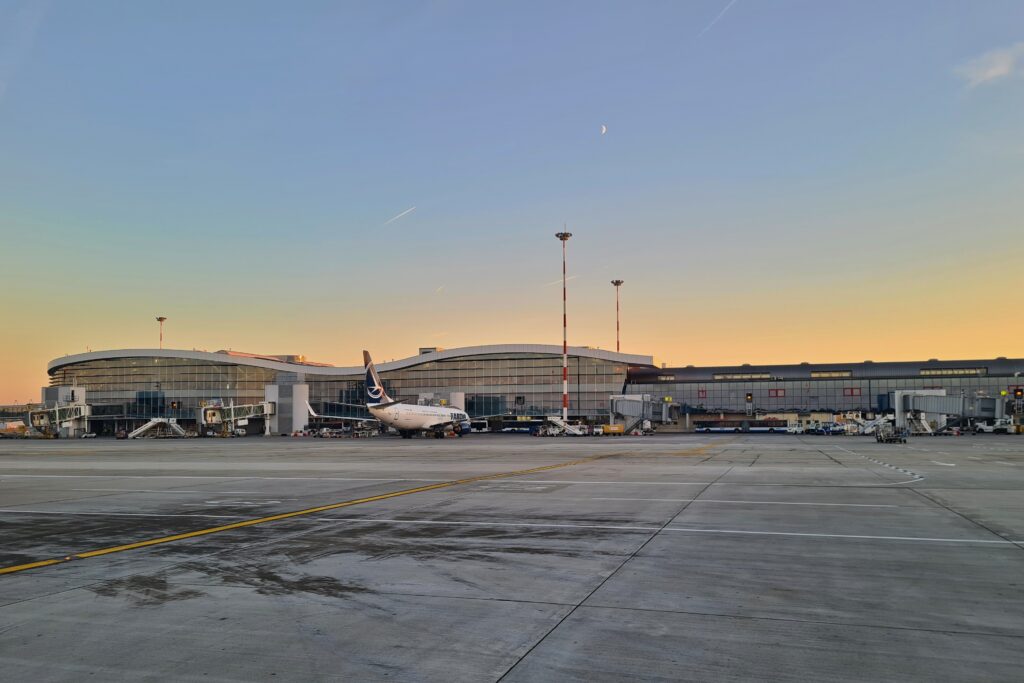
Under a new multi‑year agreement commencing 25th October 2026 for the Winter 26 season. ACL will provide full Level 3 coordination services at Bucharest, supporting one of Central and Eastern Europe’s fastest‑growing airports as it manages increasing demand and plans for its next phase of development. The agreement represents both a significant step in Bucharest’s operational maturity and a landmark moment in ACL’s continued international growth.
Bucharest Henri Coandă International Airport is Romania’s principal international gateway and the country’s busiest airport, handling 17,7 million passengers and 127,7 aircraft movements in 2025. Passenger numbers and aircraft movements have grown steadily in recent years, placing increasing pressure on available capacity. Uniquely, the airport is moving directly from an uncoordinated airport into full Level 3 coordination, having not previously operated under facilitation or formalised data‑collection processes, a transition that marks a significant step change in operational maturity and places particular importance on experience, independence, and proven capability.
The introduction of Level 3 slot coordination represents a fundamental upgrade in how Bucharest operates. Until now, airlines have largely scheduled flights independently, with limited central coordination of how demand aligns with runway, terminal and stand capacity. As traffic has grown, this can lead to congestion during peak periods and less efficient use of infrastructure.
Under Level 3 coordination, all airlines are required to obtain an approved airport slot before operating, with allocations managed independently by ACL in line with EU Regulation 95/93 and globally recognised IATA standards.
This introduces a structured, airport-wide planning process and delivers several immediate benefits:
- More efficient use of existing infrastructure – Every movement is aligned with declared airport capacity, ensuring optimal use of runways, stands, and terminal resources.
- Reduced congestion and improved punctuality – Demand is balanced across the day, easing peak pressure and supporting more reliable operations.
- Fair and transparent access for airlines – Slots are allocated according to internationally agreed rules, ensuring equal treatment of all carriers.
- Greater operational predictability – The airport moves from reactive scheduling to a coordinated seasonal plan, improving planning for staff, resources and services.
- A strong foundation for sustainable growth – Capacity can be managed effectively as demand increases, without compromising performance.
This transition effectively introduces a capacity management system for the entire airport, where every flight is planned in advance to ensure infrastructure is used efficiently at all times. For passengers, this means fewer delays and a smoother experience; for airlines, greater certainty; and for the airport, stronger control over its operations and future growth.
ACL’s appointment reflects OTP’s confidence in the company’s ability to support airports at pivotal stages of development. With a global portfolio now spanning 80 airports, ACL will provide transparent, fair and operationally robust slot allocation, helping Bucharest optimise its existing capacity while laying the groundwork for future growth.
Bogdan Mîndrescu, CEO Bucharest Airports said:
“We are delighted to partner with ACL and to become its 80th coordinated airport worldwide. This milestone reflects both the scale of ACL’s global expertise and Bucharest’s commitment to adopting international best practice.
The implementation of Level 3 slot coordination will significantly strengthen how we manage airport capacity, enabling more efficient use of infrastructure, improved punctuality, and a better experience for passengers and airlines alike.
It provides us with a strong and reliable foundation for future growth.”
Neil Garwood, Chief Executive Officer at ACL, said:
“We are delighted to welcome Bucharest Henri Coandă International Airport as the 80th airport in ACL’s global network. This is an important partnership, not only because of Bucharest’s scale and growth, but because it represents a decisive step into coordination at a time of increasing demand. Airports rarely jump straight into full coordination, and doing so successfully requires experience, independence and trust. We are proud that Bucharest has chosen ACL to support this transition and to help lay the foundations for its continued growth and connectivity.”